


Chauvin sentencing: Was the 22.5-year sentence appropriate?
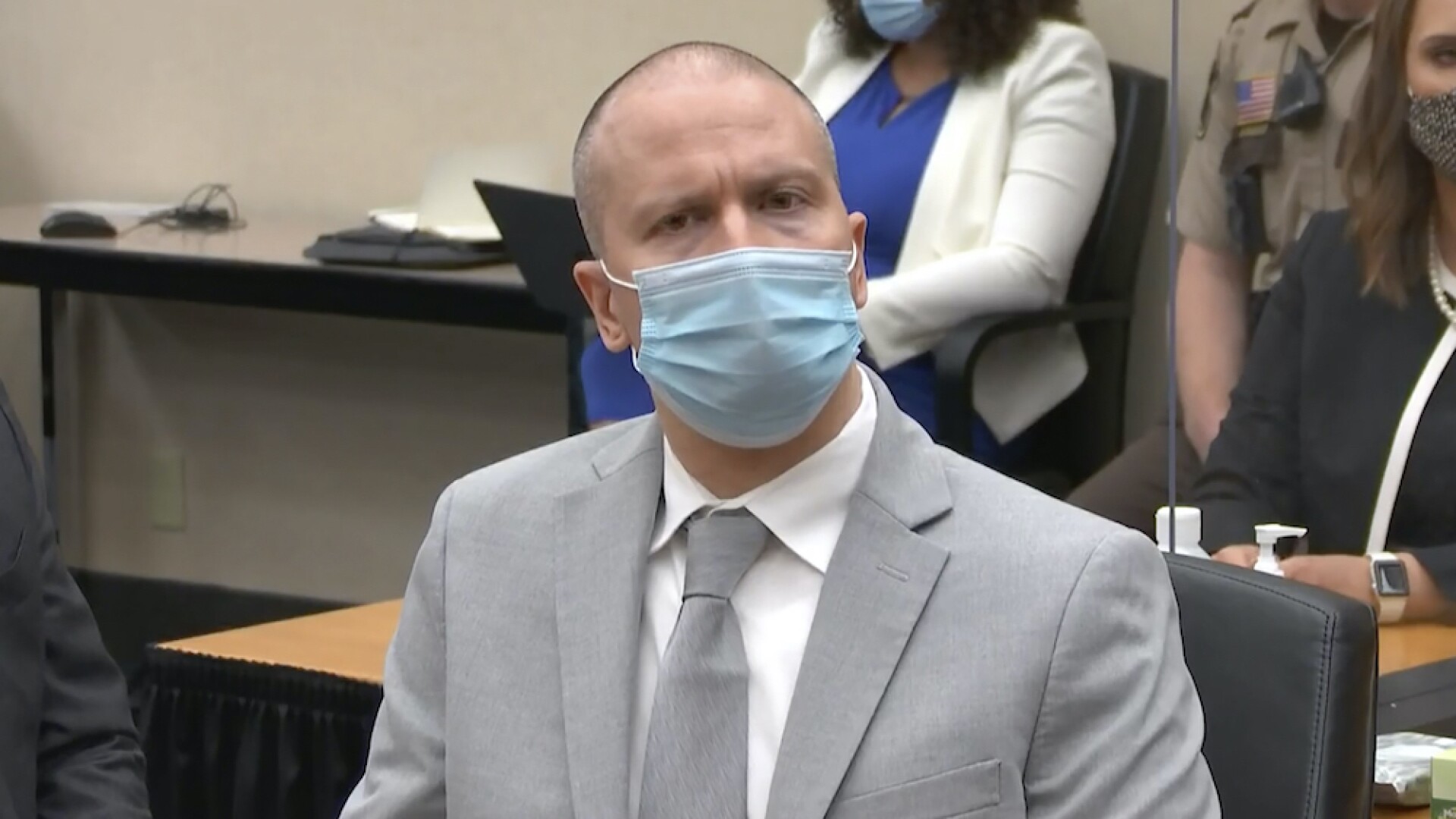
On Friday, a judge sentenced former Minneapolis police officer Derek Chauvin to more than 22 years in prison for his role in the murder of George Floyd last May.
While the judge in the case could have given Chauvin a sentence as long as 40 years, Minnesota’s attorney general over the weekend said the punishment was appropriate.
“Look, it’s 10 years beyond the recommended guidelines sentence,” Keith Ellison told ABC’s This Week. “The recommended guideline sentence is 12 and a half. We got 22 and a half. And I think the judge was right, given the particular cruelty, the abuse of trust, committing this crime in a group, in front of kids.”
Brandon Mitchell, one of the jurors who convicted Chauvin, told Newsy’s sister network Court TV he thought the sentence could have been harsher.
“I think what the judge did was fair, but I think it’s a little light,” Mitchell said. “I know the prosecution was asking for 30. I think 25 to 30 would have been fair as well.”
It’s not clear where Chavin will serve his time, but he’s currently at Minnesota’s only maximum-security prison in Oak Park Heights.
He’s alone in a 10-by-10-foot cell and only allowed out for an hour a day to exercise. He can have up to 10 photos, a radio and food from the canteen.
Attorney Ben Crump said the Floyd family is hoping Chauvin gets a longer sentence at his federal civil rights trial, currently scheduled to begin next year.
“I’m shocked that it wasn’t a longer sentence,” said Courteney Ross, George Floyd’s girlfriend. “But it’s a beginning. And I want us to continue this fight and not give up. It’s a little disappointing.”
Ellison says more needs to be done, including the passage of the George Floyd Justice in Policing Act. The House of Representatives has already passed the police reform legislation, but it remains stalled in the Senate.
“We had to focus on proving a case based on evidence in a courtroom. But I do believe the larger society must grapple with bigger issues,” Ellison said. “All over the United States, states are looking at police reform. We need them to act. We need departments to act. We need prosecutors, and we need other police officers to look inside and say, ‘What can we do to build greater trust and greater cooperation with our communities we protect and service every day?’”
This story was originally published by Alex Arger for Newsy.
.Page-below > .RichTextModule {display:none;} .Page-below .Link {font-size: 12px; padding: 5px 10px;border: 1px solid #005687;border-radius: 4px;font-family: “proxima-nova”, sans-serif; }
