


Hamilton Co. teens, experts react to youth mental health crisis
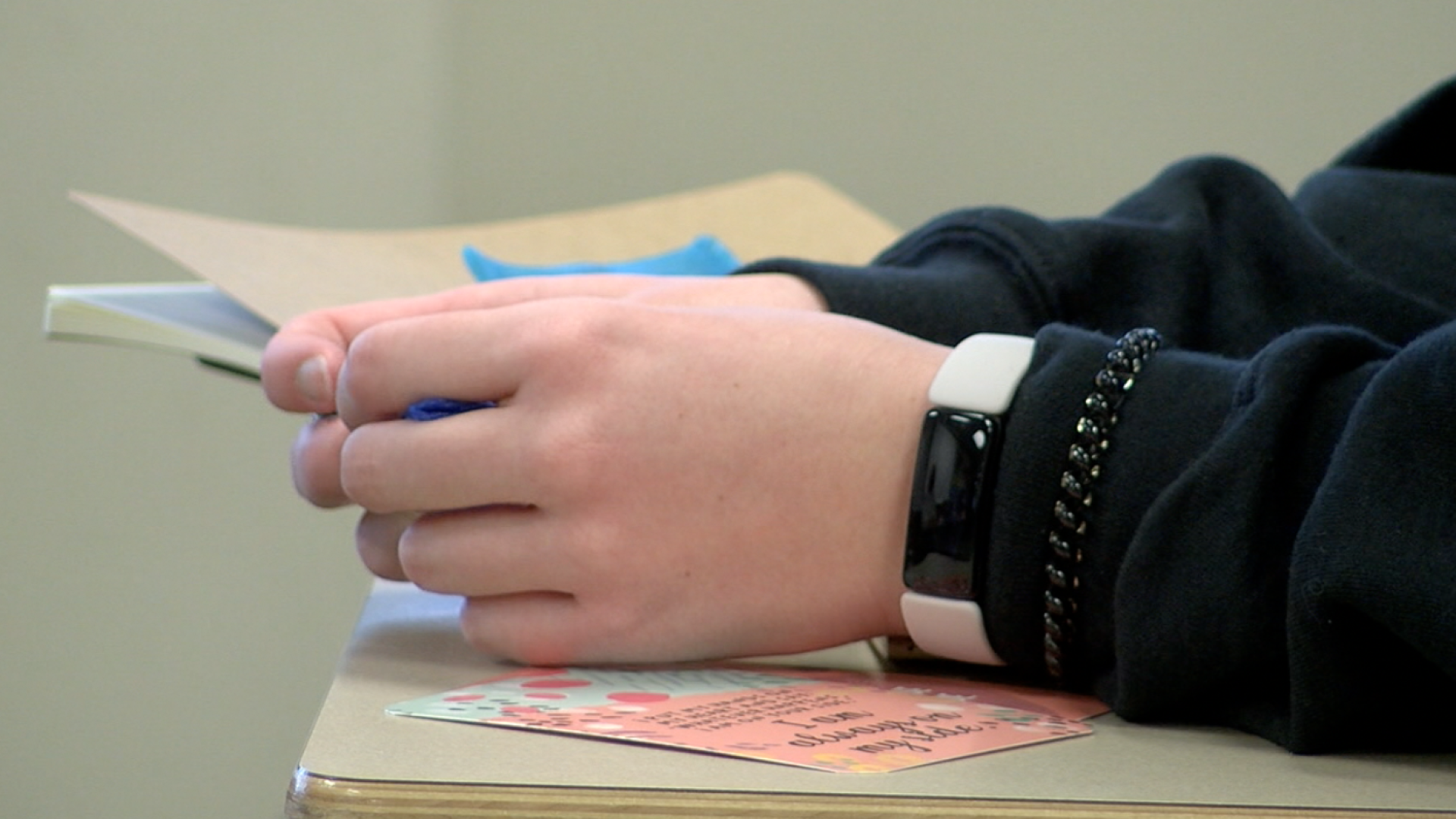
FISHERS – Finals at Hamilton Southeastern High School are around the corner and the stress that comes with it all was the topic of conversation at least in one classroom Thursday morning.
“I come in here all the time whenever I need support. This is the place to go,” Sophie Haven said. The HSE senior is talking about Leslie Caliz’s world language classroom. On this Thursday morning, it is the site of the “Bring Change to Mind” monthly meeting.
“I don’t think I’ve met a single person in our age group that has had some kind of struggle with mental health at one point or another. A single person,” Haven said. She joined the club her freshman year as a way to connect with and reach out to others going through similar mental health challenges.
“Ideally I’d like to see this room full of people, but that’s not possible sometimes but it’s just so nice to see people are trying and people are talking about it and people are here bringing our voices out,” Haven said.
Hafsa Khan is also a senior at the high school. She said her sophomore year, she joined the club after feelings of isolation.
“If a student is struggling and they don’t get help or they don’t even feel like it’s something they can talk about, it’s not going to get better,” Khan said.
In the three years since, she said not only has it helped her, but she is proud to have made a change with her classmates when it comes to mental health in schools.
“You should feel like you’re important enough to get help because that is the first step,” Khan said.
Likewise, senior Delaney Crace said “it means a lot” administrators within HSE Schools are taking steps to combat the mental health crisis.
“For me mental health really just means letting people know they’re loved, and their worth is so much more than what society puts in as worth,” Crace said. She continued, “I needed someone to check up on me in the middle of the school day. My mom and dad can’t always do that, so having that person if I need a check-in in the middle of the school day that I have those people and just the aspect knowing you’re not the only one dealing with this.”
The club — started by a student about five years — acts as a safe space to talk about mental health. They meet once a month.
Brooke Lawson said the club is one of several ways the district is responding to the mental health crisis — one that only worsened since the pandemic. The HSE Mental Health and School Counseling Coordinator said mental health therapist are at every school in the district.
“It’s important that students have access to therapeutic services at schools. It takes away a lot of barriers,” Lawson said.
This week the U.S. Surgeon General released a 53-page advisory calling for “a swift and coordinated response” when it comes to youth mental health. A problem, the Surgeon General notes, only exasperated by the pandemic.
WRTV reporter Nikki DeMentri asked Riley Hospital Clinical Psychologist Dr. Hillary Blake: “do you think this is coming too late?”
Blake responded: “Yes, I do. We as psychologist and psychiatrist and therapist we’ve been bombarded to the point where people can’t get in anywhere and this didn’t happen last week. This has been going on since the pandemic started.”
Blake said the proof is in the numbers. She noted a 320% increase in hospitalizations at Riley due to suicide attempts when comparing May of 2019 to May of 2020. When comparing, October 2020 to October 2021, Blake said the hospital saw a 150% increase in hospitalizations after suicide attempts.
“We’re seeing increase in anxiety, we’re seeing an increase in depression, an increase in self-harm and suicidal ideation, suicide attempts, substance abuse, across the board,” Riley Hospital Clinical Psychologist Dr. Hillary Blake said.
For Blake and Lawson, the advisory validated what they have seen for years. Experts say there is not one reason behind it all. Instead, factors like genes, the pandemic and social media can contribute to youth mental health challenges.
“Youth mental health has been important for a very long time. I think a lot of the things that I read in there were like we already knew that, we knew that before the pandemic,” Lawson said.
At Hamilton Southeastern, these students say they are thankful for the resources provided by administrators, but there’s still more to do. Students and experts alike say real change starts outside the walls of the classroom with ending the stigma around mental health.
For more mental health resources, click here for a list provided by Hamilton Southeastern Schools.
