


What you should know as IU Health requests help from the National Guard
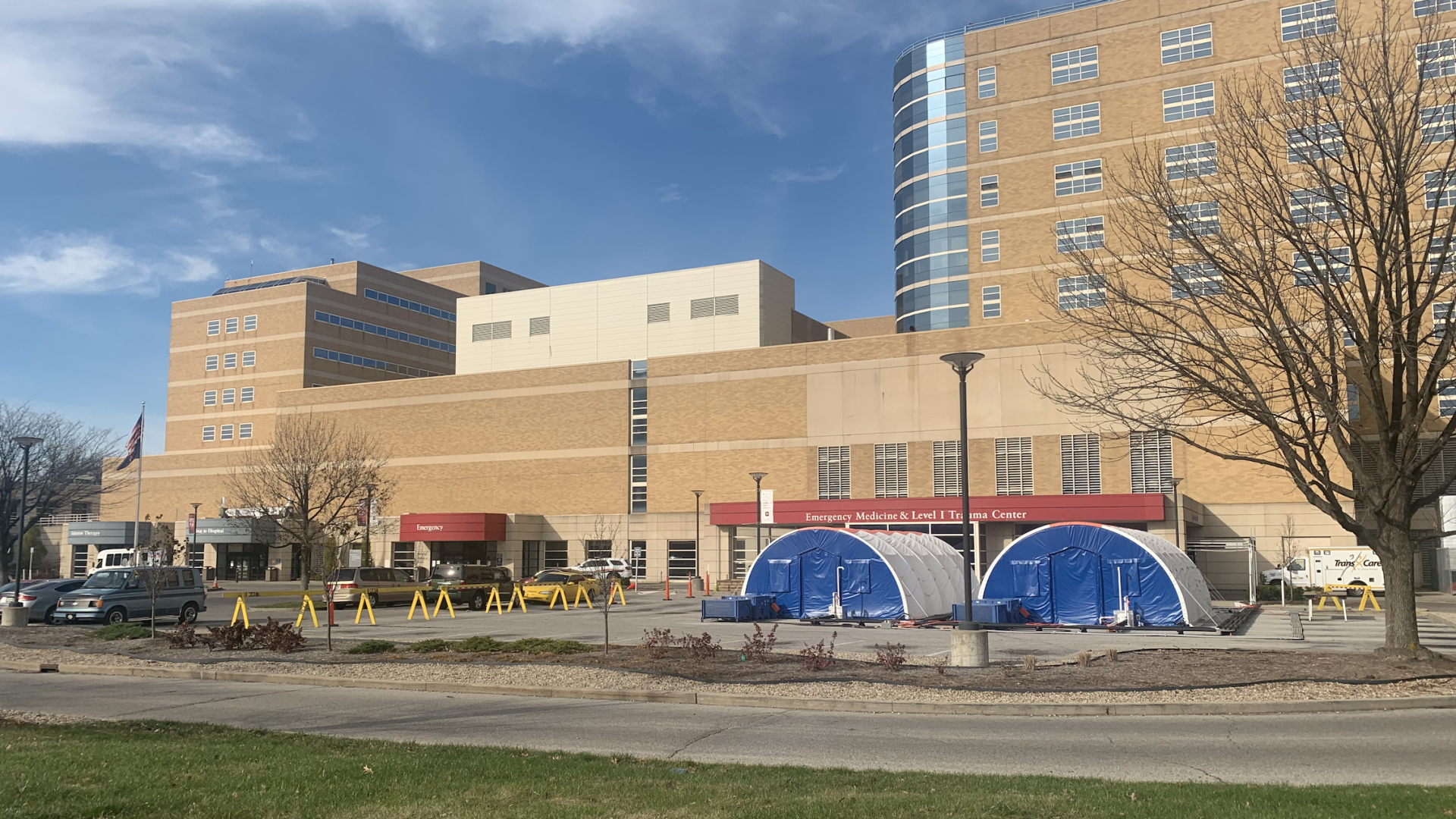
INDIANAPOLIS — IU Health officials announced Thursday that they have requested help from the Indiana National Guard as hospitalizations increase across the state amid the latest COVID-19 surge.
A statement from IU Health said it asked for assistance for most its hospitals, except Riley Children’s Hospital.
“As COVID cases continue to increase and hospitalization of COVID and non-COVID patients reach all-time highs, the demand and strain on Indiana University Health’s team members, nurses and providers has never been greater,” the statement said.
On Wednesday, the Indiana Department of Health reported 2,755 Hoosiers are hospitalized with COVID-19 across the state. It is the most number of people in the hospital with the virus since Jan. 7, 2021. Case numbers have increased to their highest levels since last winter.
IU Health said six-person National Guard teams will consist of two clinical and four non-clinical service members. Deployments will be in two-week increments.
Clinical service members might treat patients, and non-clinical service members with provide administrative and logistical support to allow hospital employees to focus on patient care, the statement said.
All members of the National Guard teams are fully vaccinated against COVID-19.
WRTV’s Nikki DeMentri reported Wednesday on the plight of hospitals across the state, which are experiencing their highest hospitalization numbers many doctors have ever seen.
“I didn’t expect us to be here at this point. I think we had all hoped our vaccine rate would’ve increased enough that we wouldn’t be at this point again,” Columbus Regional’s Hospitalist Medical Director Dr. Lee Kiser said.
The Washington Post also reported Indiana is one of four states, along with Michigan, Ohio and Pennsylvania, that are responsible for nearly half of the country’s increase in COVID-19 hospitalizations.
Micah Pollak, an associate professor of economics at Indiana University Northwest, told WRTV last week that state and local leaders need to be “shouting from the rooftops” about the need for people to get vaccinated.
Pollak noted that the toll on health care workers is already being felt more this year due to the high number of retirements and departures in the industry.
“I think we’re close to not being able to fit them in where people are in the hospital as it is, and we’re 1,000 people below where we were last winter,” Pollak said. “I think a lot of people are disconnected from the health care system. If they realized how precarious the health care system is right now, that might change things.”
