


Mars helicopter set to take flight on Sunday
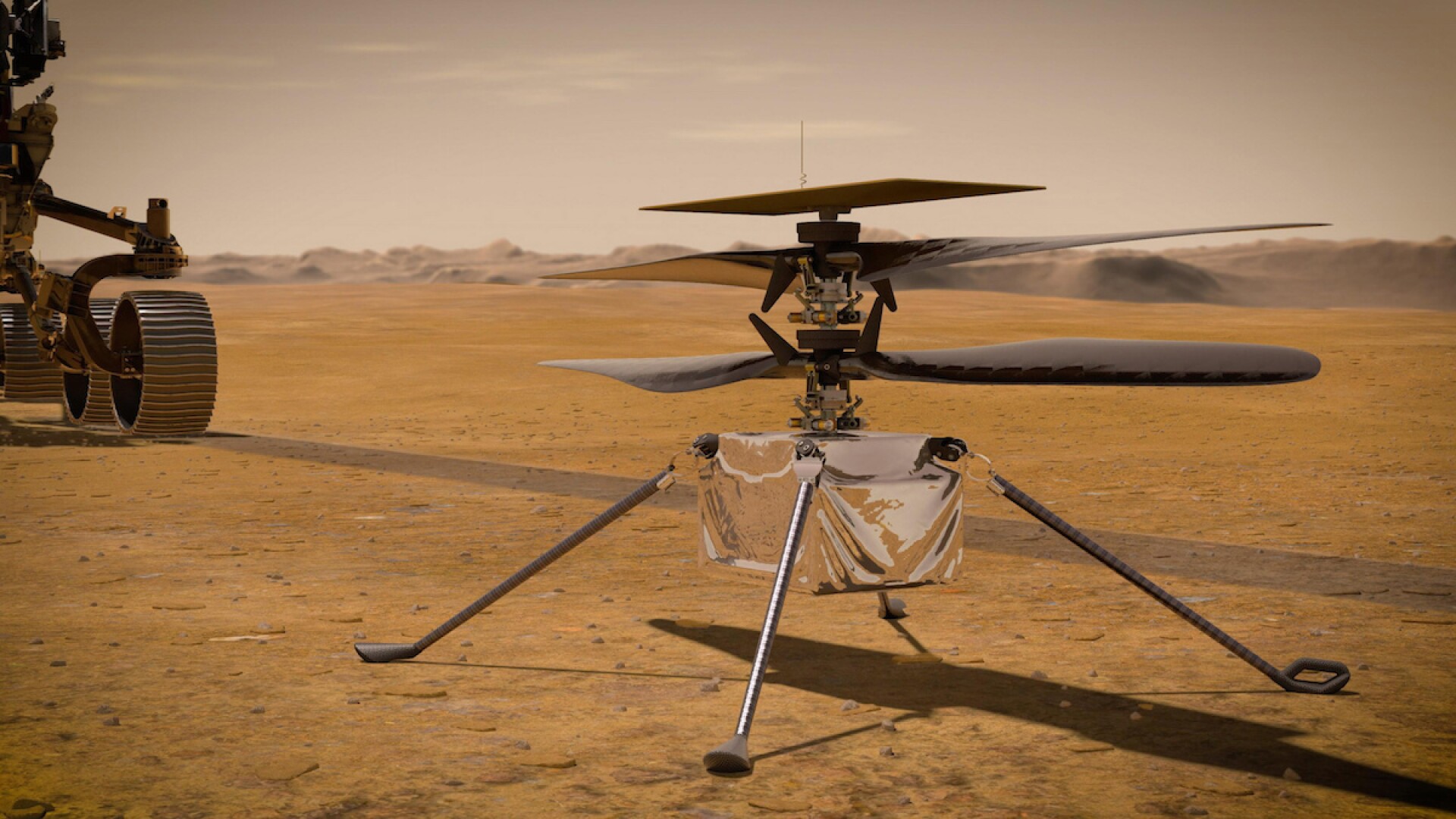
NASA announced this week the Ingenuity helicopter will attempt its first test flight over Mars on Monday. The flight is scheduled for Sunday, but results won’t make it back to Earth until Monday.
A livestream will be available on NASA’s YouTube and Facebook channels.
Ingenuity landed with the Perseverance rover, which has been beaming back HD images of Mars as part of its search for ancient life on the planet. Recently, NASA deployed Ingenuity’s protective case. During the course of April, Ingenuity is slated to make five flights.
Flying a helicopter on Mars can be daunting given that the planet has one-third Earth’s gravity, 1% of Earth’s atmosphere, and extremely cold temperatures. According to NASA, daytime temperatures can be as cold as minus 130 degrees Fahrenheit on Mars. Temperatures that cold can cause instruments to crack if not properly shielded from the cold.
“Every step we have taken since this journey began six years ago has been uncharted territory in the history of aircraft,” said Bob Balaram, Mars Helicopter chief engineer at JPL. “And while getting deployed to the surface will be a big challenge, surviving that first night on Mars alone, without the rover protecting it and keeping it powered, will be an even bigger one.”
But if Ingenuity can get off the ground, it could be another feat for NASA and space exploration.
On its first test flight, NASA plans to send it into the air for 30 seconds at a height of 10 feet. Within hours of the test flight, NASA hopes to receive images and videos from the helicopter.
.Page-below > .RichTextModule {display:none;} .Page-below .Link {font-size: 12px; padding: 5px 10px;border: 1px solid #005687;border-radius: 4px;font-family: “proxima-nova”, sans-serif; }
