


Pig-to-human transplants come a step closer with new test
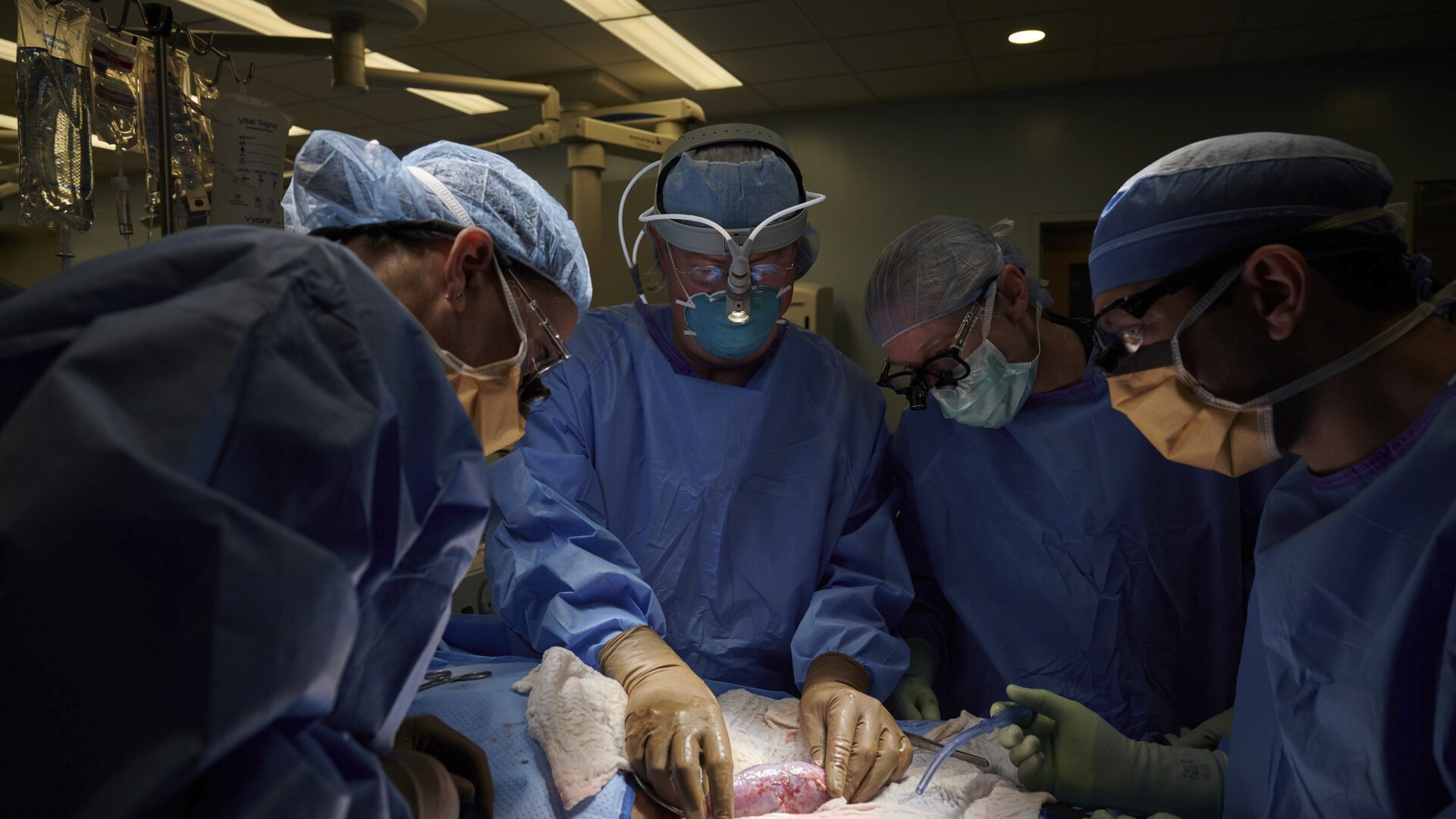
Scientists temporarily attached a pig’s kidney to a human body and watched it begin to work.
The feat represents a small step in the decades-long quest to one day use animal organs for life-saving transplants.
Surgeons at NYU Langone Health attached the pig kidney to blood vessels outside the body of a deceased recipient so they could observe it for two days. The kidney did what it was supposed to do and didn’t trigger rejection.
Dr. Robert Montgomery, who performed the procedure in September, told The New York Times that the kidney started functioning normally almost immediately, making urine and the waste product creatinine.
The Times reports the kidney was obtained from a pig that was genetically engineered to grow an organ that was unlikely to be rejected by a human recipient.
Experts say the test done last month paves the way for the first experimental pig organ transplants in living people in the next several years.
According to The Times, a steady stream of these organs would offer a lifeline to the more than 100,000 Americans who are currently waiting for a transplant. That includes over 92,000 who need a kidney.
.Page-below > .RichTextModule {display:none;} .Page-below .Link {font-size: 12px; padding: 5px 10px;border: 1px solid #005687;border-radius: 4px;font-family: “proxima-nova”, sans-serif; }
