


Stone Age skeleton missing foot may show oldest amputation
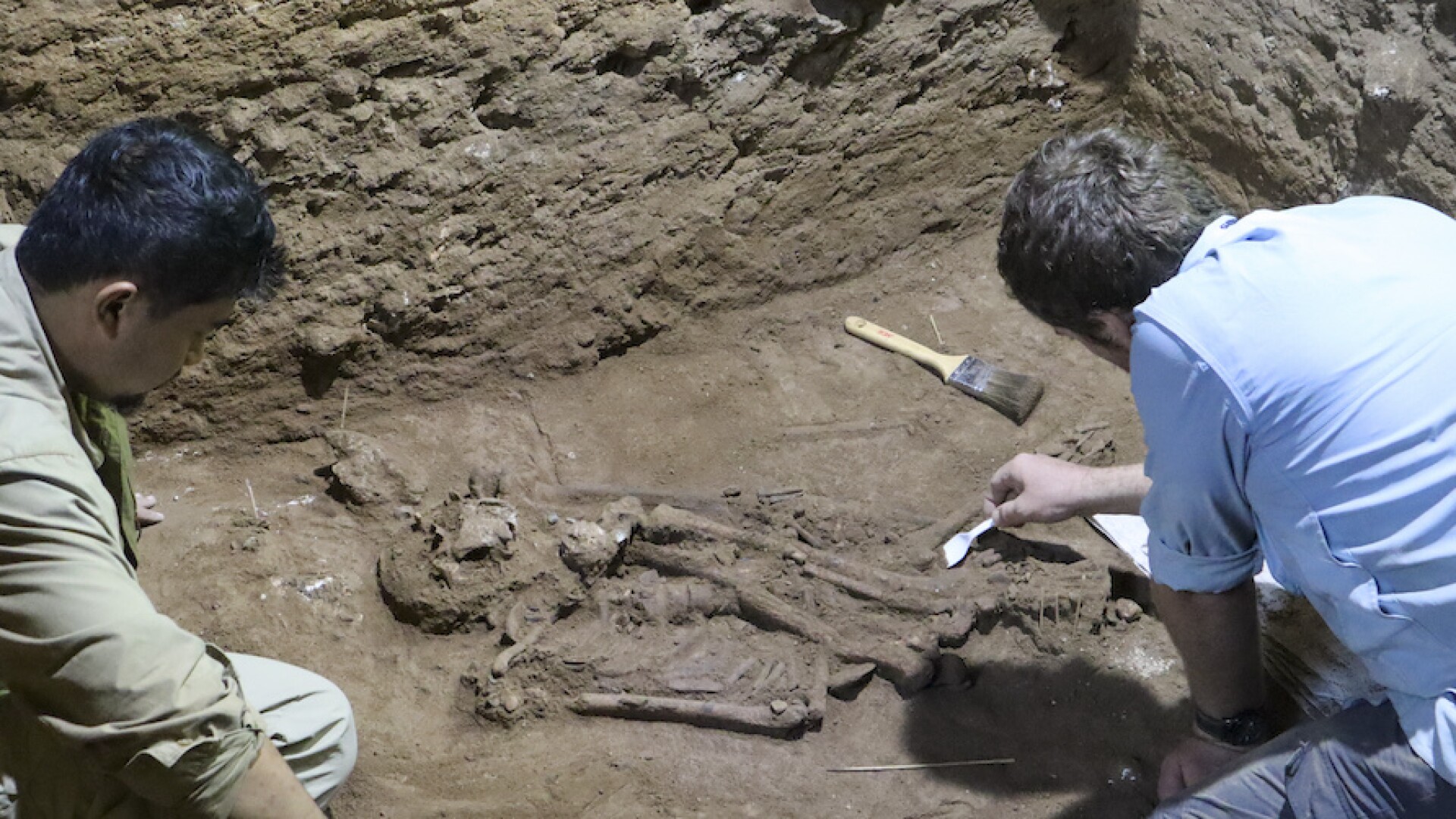
A skeleton from 31,000 years ago may be the earliest evidence found of amputation surgery in humans.
According to a study published Wednesday in the journal Nature, the remains show a child from Indonesia who had part of their left leg cut off on purpose.
The prehistoric patient recovered from the surgery and lived for at least six more years before dying from unknown causes.
The remaining leg bone shows a clean cut, which scientists say means the leg wasn’t bitten off by an animal or crushed in an accident.
The study may show that early hunter-gatherers paid more attention to health care than previously thought.
The remains were discovered when researchers were exploring a cave in Borneo.
Researchers aren’t sure what tool was used to amputate or how infection didn’t occur, but they believe sharp stone tool and plants could’ve been used.
Before this one, the earliest prehistoric amputation was discovered in 2007 when researchers found a French farmer from 7,000 years ago who had his forearm partially removed.
