


Telescope documents impact spacecraft made with asteroid
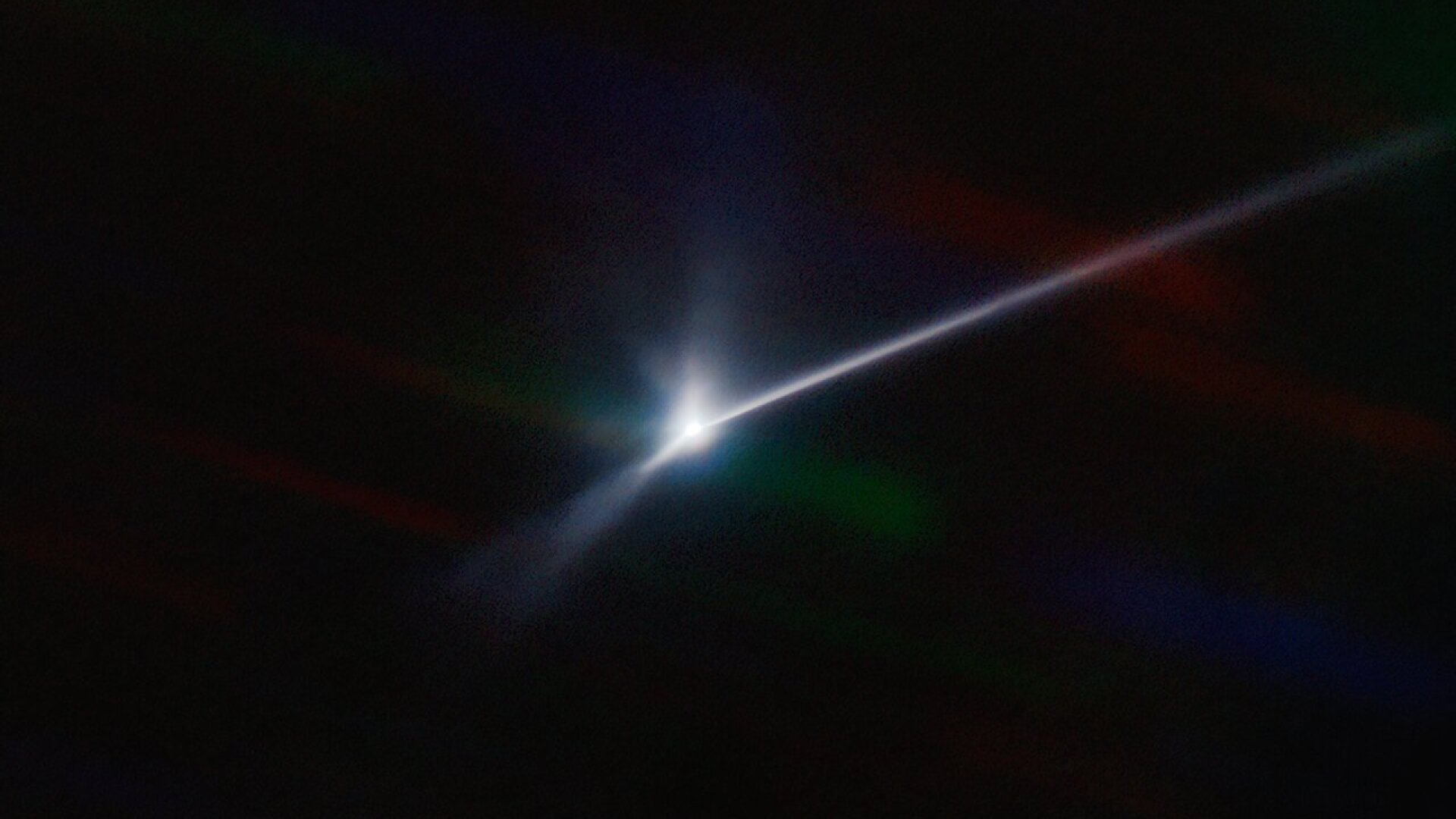
Last week, the world watched as a live video feed from a spacecraft went dark as it struck an asteroid. Now, scientists can see the impact the spacecraft bore.
The NOIR-Lab’s SOAR telescope in Chile revealed plumes of dust and debris coming from Dimophors, the small asteroid that was impacted by the Double Asteroid Redirection Test spacecraft. The telescopes captured the dust and debris two days after the spacecraft’s crash.
It was part of a test to see if scientists can alter the path of Dimophors, which is the smaller companion asteroid of Didymos. Dimophors is only about 500 feet wide while Didymos is a half-mile wide. The asteroid system has an elliptical orbit around the solar system.
“Now begins the next phase of work for the DART team as they analyze their data and observations by our team and other observers around the world who shared in studying this exciting event,” said Matthew Knight, a U.S. Naval Academy astronomer. “We plan to use SOAR to monitor the ejecta in the coming weeks and months.”
Scientists want to know if a spacecraft can deflect an asteroid for planetary defense. It will take some time for astronomers to see what changes were made to the asteroid’s orbit.
The asteroid poses no threat to Earth.
The asteroid’s surface is believed to be extremely rough and full of boulders. It does not have a known atmosphere.
