

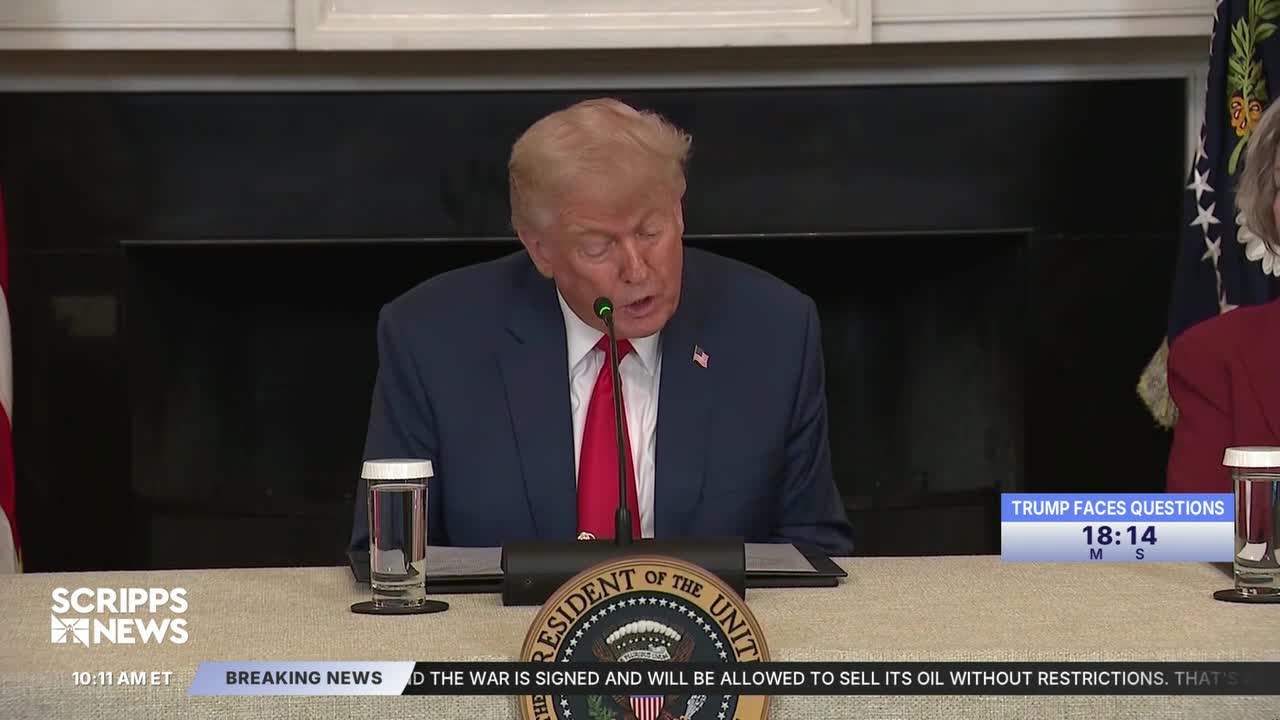


Starting in July, families will have a new way to save money for their children's future through Trump Accounts — a tax-advantaged IRA that begins with a $1,000 balance.
"This is a pro-family initiative that will help millions of Americans harness the strength of our economy to lift up the next generation and they'll really be getting a big jump on life," President Donald Trump said.
RELATED STORY | Melania Trump unveils a spinoff of Trump Accounts for children in foster care
David Perez, founder of Tax Maverick, broke down how the accounts work, who qualifies, and how families can maximize the financial benefit.
Who is eligible?
Any parent with a child under 18 can open a Trump Account. However, the $1,000 seed money is reserved for children born between Jan. 1 and Dec. 31, 2026 — a two-year window.
How do you open one?
Parents must apply at trumpaccounts.gov on behalf of their children and name a beneficiary. Applicants must also file Form 53A with their tax return to receive the $1,000 gift.
How does it compare to a 529 or Roth IRA?
Perez described Trump Accounts as a hybrid between a 529 plan and a traditional IRA.
"I would consider it not a Roth, but I would consider it a hybrid between a 529 and a traditional IRA because it is going to be taxed at some point," Perez said.
RELATED STORY | 'Trump Accounts' for kids: How the program works and when it begins
Unlike a 529, the funds are not limited to educational expenses. The money can be used to buy a home, plan for retirement, or for other financial goals.
How much could it grow?
The White House projects that $1,000 left untouched could grow to nearly half a million dollars by retirement, based on roughly 7% annual compound interest. Parents can contribute up to $5,000 per year until the child turns 18, which Perez said could grow to approximately $3 million by retirement age.
What happens at 18?
Withdrawals are allowed at 18, but early withdrawal penalties and ordinary income taxes apply. Perez recommends converting the account to a Roth IRA at that point.
"The moment you turn it into a Roth, the interest and the taxes or the accumulation period becomes tax-free," Perez said.
Because most 18-year-olds are in a low tax bracket, the conversion tax could be minimal — potentially zero.
