

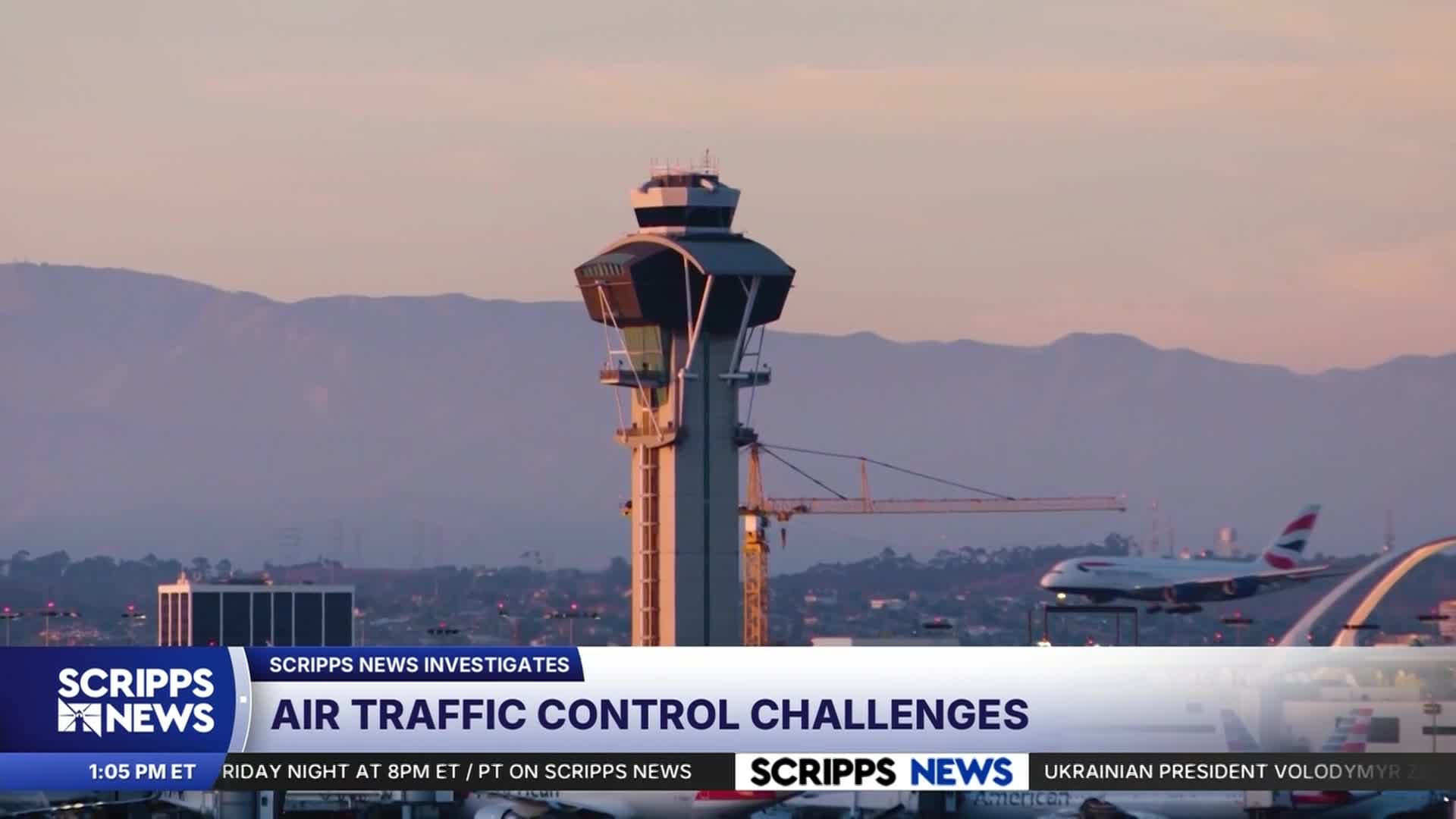



The leader of the Federal Aviation Administration says there should be fewer flight delays and cancellations caused by air traffic control problems during the upcoming busy summer travel season, a result of the agency chipping away at a shortage of controllers and the work to replace the aging systems they use.
“We're certainly in a much better posture today than we were in summer of 2025 or summer of 2024,” said FAA Administrator Bryan Bedford in an interview with Scripps News.
The agency is now in its second year of a major overhaul of the nation’s air traffic control system, spending billions of dollars to upgrade outdated technology while also recruiting more controllers to fill a staffing gap caused by funding lapses in the 2010s and training disruptions during the pandemic.
RELATED STORY | Transportation Secretary Sean Duffy touts $12.5B upgrade for outdated air traffic control tech
The FAA reported a record number of students graduating from the air traffic control academy in Oklahoma. Last year the agency hired 2,026 new controllers, surpassing its goal of 2,000, the most in six years.
The FAA still remains thousands of controllers short, and that won’t change for a while.
“The FAA did a phenomenal job hiring 2,000 candidates last year and then looking to hire a record number of controllers this year,” said Michael McCormick, associate professor at Embry-Riddle Aeronautical University. “It's not an immediate fix, but it's a fix that in the long-term will yield great results.”
Digging out of the staffing hole will take at least another three years, according to the FAA’s most recent controller workforce plan.
The FAA plans to hire 8,900 more controllers by 2029, but with retirements, that will still put the system about 1,000 controllers short of target staffing levels.
Despite finding ways to shave months off instruction, it still takes years to go through training. Only about 2 percent of recruits make it to the end.
“The standards are high and rightfully so,” Bedford said. "The system for training is at its capacity. We have every nook and cranny at our academy full of trainees.”
ADDITIONAL REPORTING | Air traffic control school: A look inside the FAA's largest training class
The FAA is now working on ways to increase the number of recruits who can go through the certification process at once.
“We are building out more and more infrastructure to increase the number of pipes that we have feeding the system,” Bedford said. “But I can tell you today, the system is full in terms of what we can train, and it just takes years to get them through the training process.”
Without full staffing, during peak times the FAA will move controllers to busier shifts and airports while also asking staffers to work overtime.
As passengers experienced during the 2025 government shutdown, the FAA will also reduce takeoffs and landings, causing delays and cancellations, when there are not enough controllers to handle the number of flights.
The burst of new hires will help improve the system, along with $12.5 billion in technology upgrades now underway, Bedford said.
"I do feel like we are playing from behind,” Beford said. “This modernization should have been done decades ago. It has to get done and I promise you we'll get it done.”
While the $12.5 billion is a major infusion of funding to upgrade air traffic control systems, the FAA still needs another $20 billion to finish the job.
