


INDIANAPOLIS -- Nine Hoosiers have already died from the flu this season, according to the Indiana State Department of Health, and the flu season hasn't even reached its peak in the state.
The first flu-related death in Indiana for the 2017-18 season was reported on December 8, more than a month later than the first death of 2016. The first death of the season was a juvenile, according to the ISDH.
In the three weeks following, 8 more flu-related deaths were reported in the state, according to the report dated December 23. All of those deaths were over the age of 50. 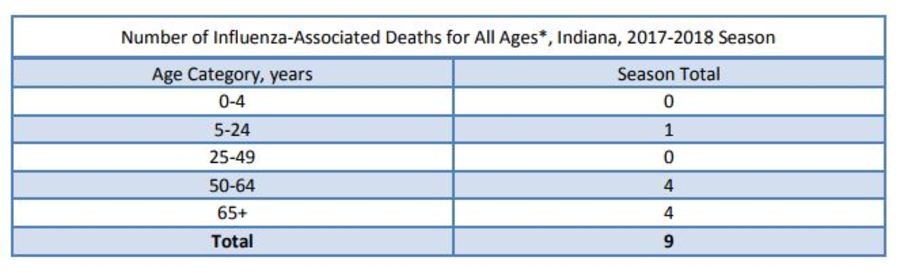 The final report of the year hasn't been completed, meaning the 2017 part of the season could end with an even higher number of flu deaths.
Flu activity reached widespread in Indiana earlier than most states and flu-activity continues to be high, which has prompted multiple central Indiana hospitals to start restricting visitors.
READ | These hospitals are restricting visitors because of the flu
On top of the increased number of flu cases in the state, 13 long-term health care facilities also reported outbreaks in the final weeks of the year.
Below are some quick facts about the flu provided by the Indiana State Department of Health.
What is influenza (flu)?
Flu is an illness caused by influenza viruses that infect the respiratory tract. The illness can be mild to severe and can cause death in some people. Although anyone can become infected with flu, the elderly, young children, or anyone with other health problems are at more risk for hospitalizations and complications. Every year 3,000-49,000 people die of influenza and the problems of the disease. About 90% of influenza-associated deaths occur in people aged 65 years and older.
Flu is not a reportable disease in Indiana so the number of cases is not tracked.
What are the symptoms of influenza?
Symptoms usually include:
- Fever
- Chills
- Headache
- Cough
- Sore throat
- Muscle aches
- Diarrhea and nausea occasionally in children
Symptoms usually start about 1-4 days after being exposed and can last 2-7 days. Complications may include pneumonia, hospitalization and death.
How is influenza spread?
Flu is spread from close contact with persons who are sick with flu or from touching surfaces or objects that have flu virus on them. Infection can occur when flu viruses contact the eyes, mouth, or nose, and through breathing in droplets from a sneeze or cough. People may be able to spread the virus to others about one day before they show symptoms and up to seven days after becoming sick.
That means that you may be able to spread the flu to someone else before you even know you are sick, as well as while you are sick.
Who is at risk for getting influenza?
In the United States, on average 5% to 20% of the population gets the flu and more than 200,000 people are hospitalized from seasonal flu-related complications. Some people, such as older people, young children, pregnant women, and people with certain health conditions, are at high risk for serious flu complications.
These health conditions include:
- Asthma
- Neurological and neurodevelopmental conditions
- Chronic lung disease
- Heart disease
- Blood disorders
- Endocrine disorders (i.e., diabetes)
- Kidney and liver disorders
- Metabolic disorders
- Weakened immune systems due to medication or disease, such as HIV/AIDS
- People younger than 19 years of age receiving long-term aspirin therapy
- People who are morbidly obese
How do I know if I have influenza?
A health care professional may be able to diagnose a flu infection by looking at your symptoms. Sometimes your nose will be swabbed and tested for the influenza virus.
How is influenza treated?
Flu is usually treated with medicine to bring down the fever, throat or cough drops, water, and plenty of rest. If the diagnosis is made at the very beginning of the illness, a doctor may prescribe influenza antiviral medicine.
How is influenza prevented?
The best way not to get flu is to get a flu shot every year before the flu season starts. Since flu viruses change over time, it is important to get a shot each year.
Each year the vaccine is remade to include the types of flu viruses scientist think will be around to cause illness during the flu season.
The vaccine begins to protect you within a few days after you get the flu shot, but the vaccine is not fully effective until about 14 days after the shot.
Good respiratory hygiene is important to prevent the spread of ALL respiratory infections, including the flu:
- Use your elbow or upper arm, instead of your hands, or a tissue to cover your mouth and nose or when you cough or sneeze. Immediately throw used tissues into the trash can. Try not to touch your eyes, nose, or mouth. Many diseases often spread this way.
- To clean your hands after coughing or sneezing, wash with soap and water, or clean with alcohol-based hand cleaner if water is not available.
- Avoid close contact with people who are sick.
- If you get flu, stay home from work, school, and social gatherings. This will help others from catching your illness and gives your body the rest it needs to get better.
MORE TOP STORIES | Couple mysteriously disappears after visiting family in Indy, car found abandoned in Madison Co. | Photos: The faces of 2017's homicide victims | Identities released of elderly couple, son found dead in Hamilton County home on Christmas Day | 9-year-old with pellet gun stops man from stealing pickup truck in Kokomo | In pictures posted to social media, young homicide victims showed off guns, cash
Top Trending Videos
