


SAN DIEGO (WRTV) — Three Purdue University alumni are aboard the Navy ship preparing to retrieve the Artemis II astronauts when they splash down in the Pacific Ocean.
The four-person crew is scheduled to return just after 8 p.m. on Friday. They will complete a 10-day journey that took them farther from Earth than anyone in history.
RELATED | How to watch the Artemis II crew splash down after historic moon mission
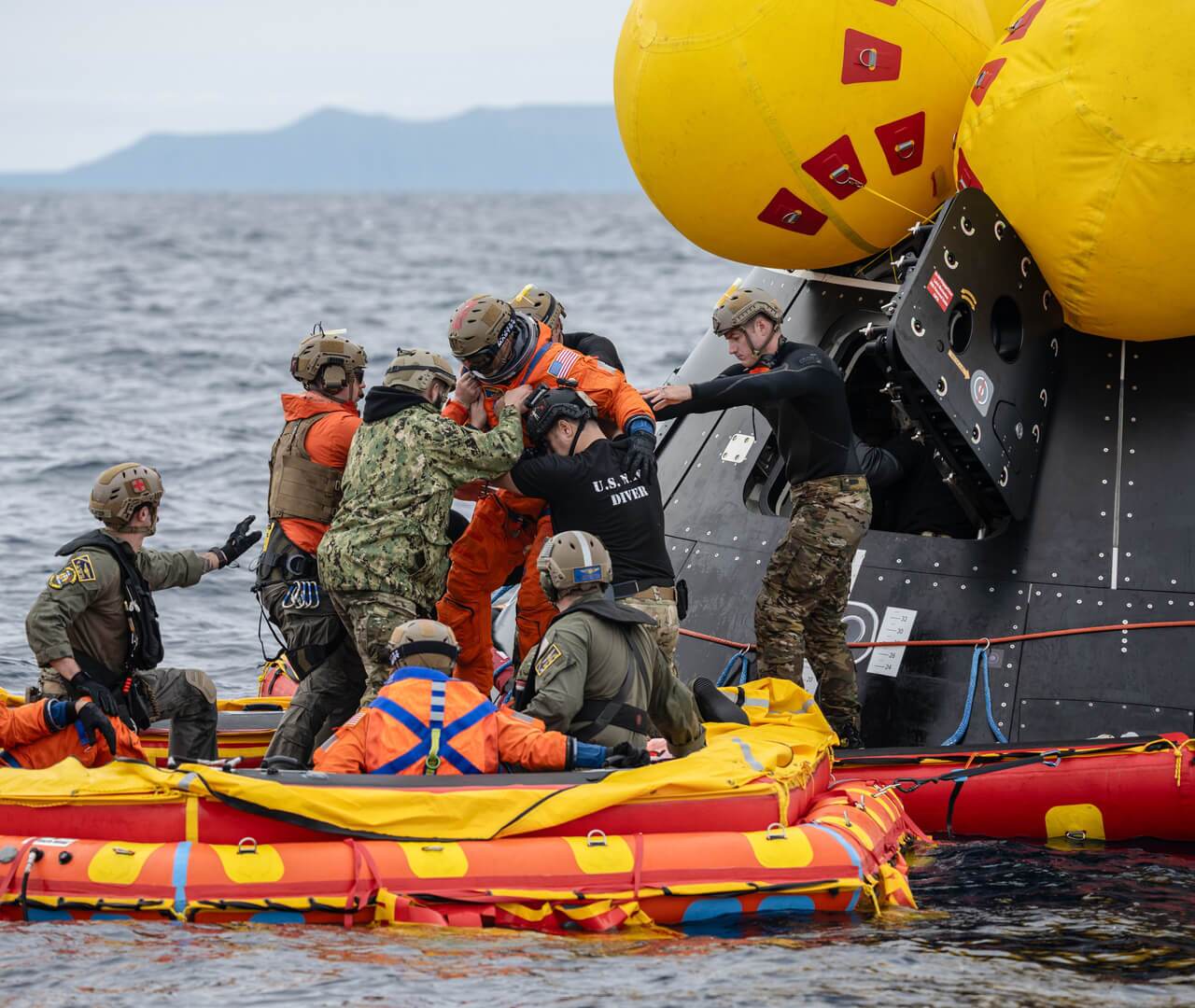
Purdue graduates Emily Spreen, Jason Endsley and Rob Lantz are part of NASA's Landing and Recovery Operations team. They have spent years preparing for this moment aboard the USS John P. Murtha.
"I'd describe the recovery process as a carefully coordinated ballet," said Spreen, according to Purdue University. "There are a lot of moving parts and interfaces between NASA and the DOD (Department of Defense) that all must work smoothly together."
Spreen earned three degrees from Purdue. She received a bachelor's in aeronautical and astronautical engineering in 2015. She completed a master's in astrodynamics and space applications in 2017 and a doctorate in aeronautical and astronautical engineering in 2021.
The NASA aerospace engineer leads a team that pinpoints where the spacecraft and jettisoned hardware will land. Her work ensures the safety of waiting recovery crews.
Endsley graduated from Purdue Polytechnic with a bachelor's in aeronautical engineering technology in 2019. He earned a master's in aerospace and aviation management in 2020.
He serves as lead instrumentation engineer for the Landing and Recovery team. Endsley will share real-time data to help the team account for weather and water conditions.
Lantz earned a bachelor's degree in aeronautical and astronautical engineering in 1988. He is NASA's lead engineer for the handling and access subsystem.
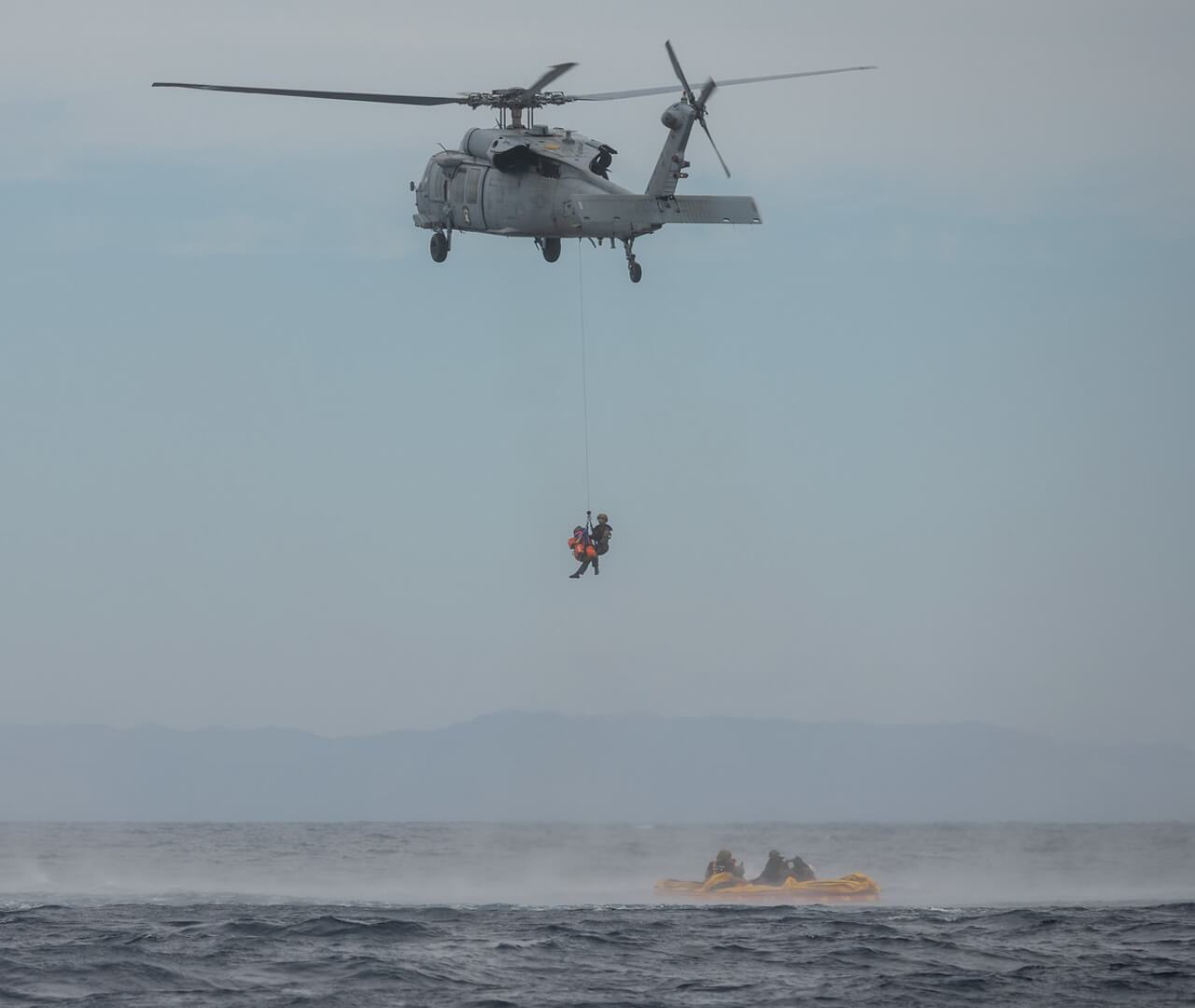
The splashdown is projected between San Clemente Island and Catalina Island off the coast of San Diego. Four helicopters will retrieve the astronauts one at a time.
The Artemis II crew beat the Apollo 13 record for farthest human spaceflight. The Orion spacecraft reached 252,756 miles from Earth.
The mission marked the first time humans traveled to the moon since December 1972. Apollo 17 commander Eugene Cernan, a Purdue graduate, took the most recent steps on the lunar surface.
"Low earth orbit is cool, but going to the moon is awesome," Lantz said to Purdue University.
The three alumni are among many Boilermakers working on the Artemis program. NASA plans to return astronauts to the moon by 2028.
