

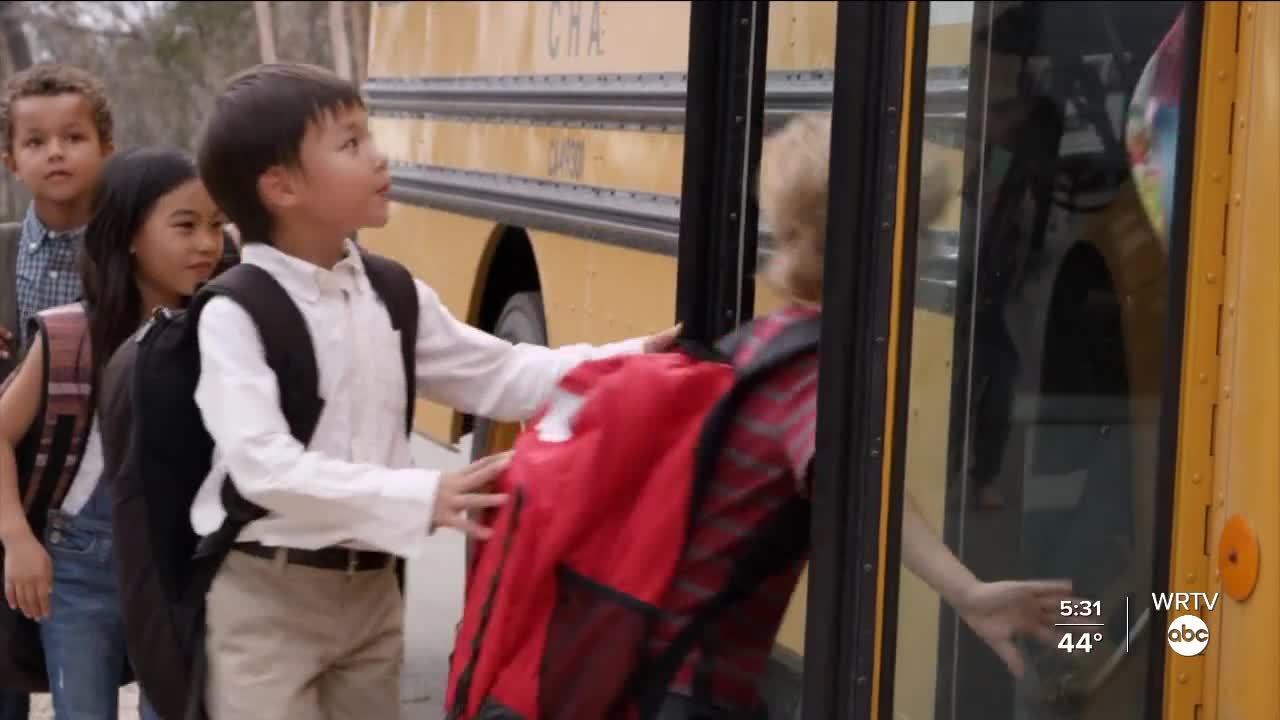


INDIANAPOLIS — The days are getting shorter and working for you we want to make sure you and your kids are safe getting to and from school.
Many schools are urging kids and parents to make themselves more visible getting to and from school.
IPS is doing this through its Take Care Be Aware Campaign.
Through this, IPS is taking the time to teach kids safe practices to get to and from school.
Kathy Langdon is heading the campaign. She said it’s important that kids wear high-visibility clothing.
She said your child should avoid wearing dark colors at the bus stop or while walking to school and always be aware of their surroundings.
“We’re really stressing the fact that they need to be attentive, and they need to make sure that they're aware of what is around them — making sure that they're not they don't have headphones on they're paying attention to the drivers on the roads and using crosswalks, the pedestrian sidewalks,” Langdon said.
There are several ways you can make yourself or your child more visible especially as the days get darker.
The easiest is to avoid wearing dark clothing.
You can also carry a flashlight, wear a reflective vest or even put reflective tape on your backpack.
-

Pedestrian struck, in critical condition on Indy's near northwest side
A pedestrian is in critical condition after being struck in a hit-and-run crash on the near northwest side of Indianapolis Thursday morning.
Weather Forecast 5.20.26 at 7 p.m.

IMPD arrests 16-year-old tied to 19 burglaries, 4 others on gun charges

IU’s Curt Cignetti getting ready to drive pace car at Indy 500


