
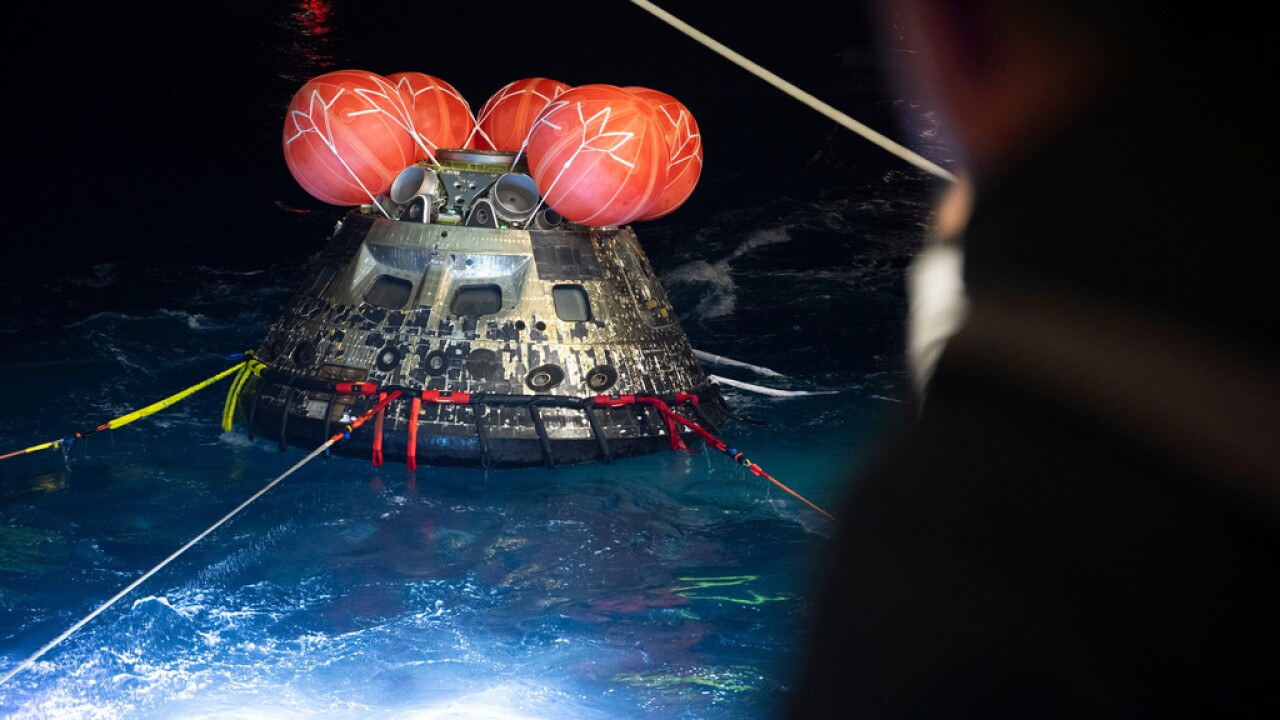


By all indications, Artemis II’s landing was a success, as it splashed down in the Pacific Ocean on Friday after a nine-day journey that included a flyby of the moon.
After traveling more than 250,000 miles from Earth, the Artemis II Orion spacecraft landed within a mile of its intended target, reaching speeds of up to 24,664 mph.
RELATED STORY | Artemis II crew splashes down in Pacific, ending historic moon mission
“This crew has said time and again that they were going for all of humanity. And today we fulfilled that objective by completing their journey and returning them safely to Earth,” said Rick Henfling, Artemis II entry flight director.
The mission was the first to send humans toward the moon in more than 50 years and was designed as a stepping stone for future lunar missions. Artemis III, scheduled for launch in mid-2027, will not travel to the moon as originally planned. Instead, the crew will use the flight to test equipment and docking capabilities.
NASA plans to send astronauts to the lunar surface in 2028 with the Artemis IV mission.
One key set of data could determine whether NASA can stay on schedule.
Problems emerged after Artemis I’s landing in 2022, when engineers found issues with the Orion spacecraft’s heat shield. NASA said the shield exhibited more cracking and charring than expected.
In response, NASA changed how the heat shield was applied to Orion and adopted a different landing angle to minimize stress on the shield. Officials said late Friday it was too soon to know how successful those changes were, but they expect to have answers soon.
RELATED STORY | New reentry strategy guides Artemis II’s historic return to Earth
Lori Glaze, deputy associate administrator for NASA’s Exploration Systems Development Mission Directorate, said data from the spacecraft was sent instantly to Mission Control and is now being analyzed.
She added that divers photographed the heat shield while Orion was still in the ocean, before recovery.
Howard Hu, Orion program manager, said the spacecraft will undergo a 30-day inspection period culminating with a report. He said NASA expects to reuse 286 components from Artemis II.
