

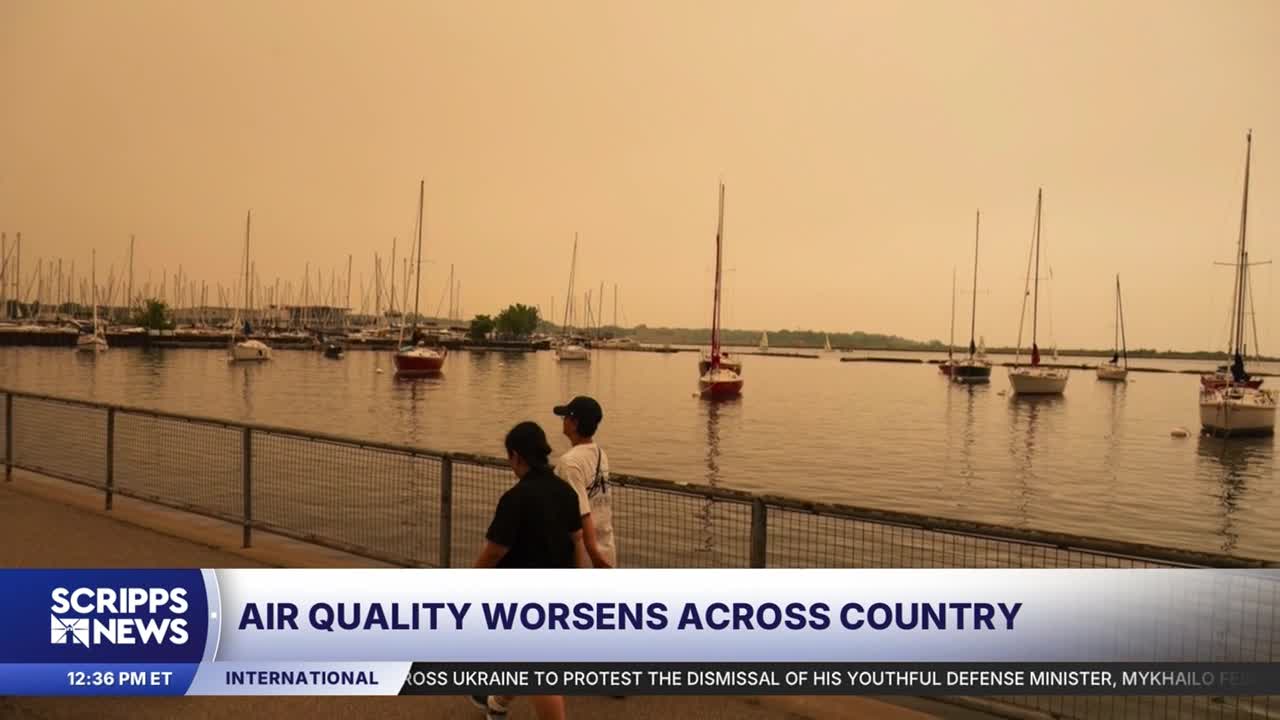


Americans across the Upper Midwest and parts of the Northeast are dealing with some of the worst air quality in the world as wildfire smoke from Canada blankets the region.
Over 100 wildfires continue to burn across Canada as smoke from the fires is being pushed southeast by shifting winds. The skies over the Great Lakes states appear nearly apocalyptic, and forecasters expect the smoke to continue spreading.
RELATED STORY | How to protect yourself from wildfire smoke and poor air quality
According to the Environmental Protection Agency's AirNow website, air quality in cities like Detroit and Chicago is currently classified as "hazardous" — the most severe category. That puts people in sensitive groups at particular risk, including children, the elderly, and those with heart or lung complications.

The heavy concentrations of smoke from the Canadian wildfires are expected to shift this week into the Northeastern U.S. and the Mid-Atlantic region. The areas currently worst-affected are those bordering Canada — states like Wisconsin, Minnesota, Michigan, and the northwestern parts of New York.
Officials are urging people to limit outdoor activity and stay indoors when possible. Overall, smoke from the Canadian wildfires is expected to affect more than 115 million Americans across the country.
Meanwhile, the situation is being compounded by extreme heat in parts of the country, with some areas seeing temperatures surpass 100 degrees Fahrenheit. The high temperatures are creating a heat dome, which means smoke is being concentrated close to the surface of the ground.
