

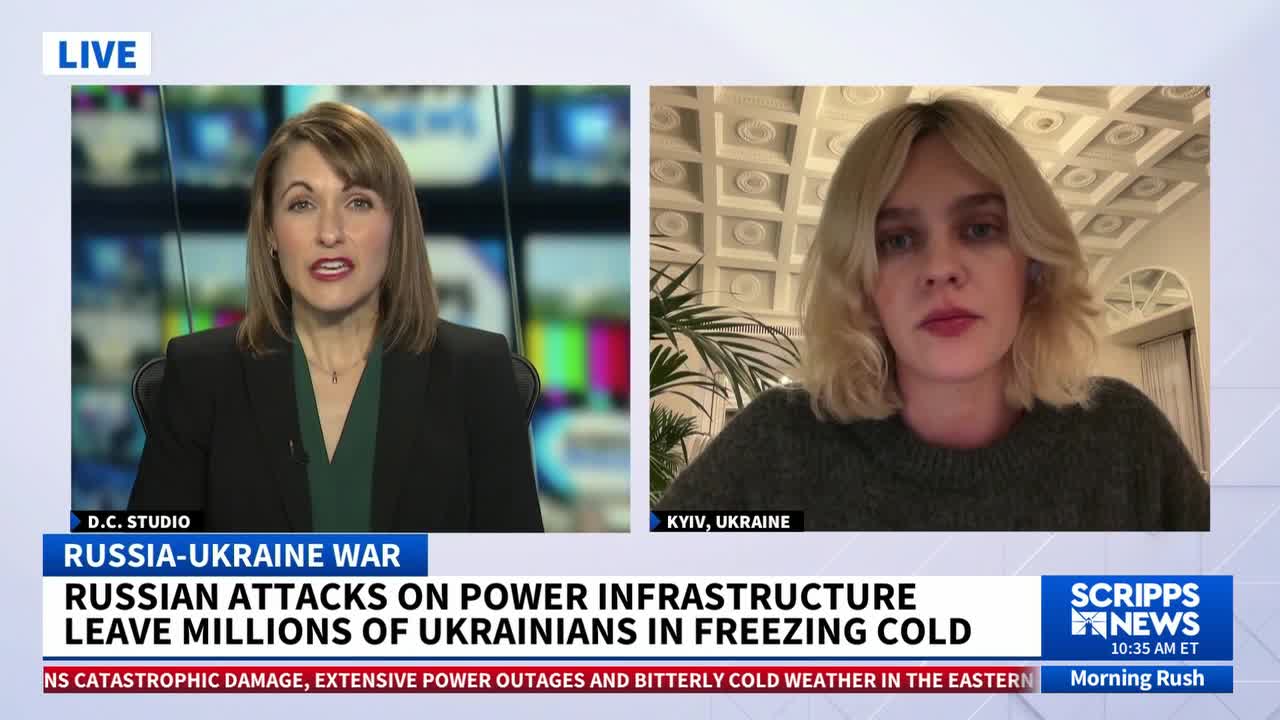


Repeated Russian attacks on Kyiv’s energy infrastructure have left large parts of the city without heat, water or electricity during one of Ukraine’s coldest winters in years.
“The situation has been really bad in Ukraine in general, but also specifically in Kyiv throughout this month,” Noosphere reporter Anna Conkling explained in an interview with Scripps News.
She described a massive overnight attack on Jan. 9 that targeted energy facilities and left about 6,000 residential buildings — roughly half of Kyiv’s apartment buildings — without heat.
RELATED STORY | Ukraine's Zelenskyy says his repeated warnings to Europe feel like 'Groundhog Day'
“There were a lot of electricity outages, there were also water outages, and 6,000 is actually half of the entire Kyiv, apartment, residential buildings,” she said.
Rescue crews have been working around the clock for weeks to restore services, as temperatures dropped to around zero degrees Fahrenheit, according to Conkling.
She said most residents she has spoken with are missing at least one essential utility: heat, water or electricity.
“It’s very rare that all three of these things will exist,” she said.
The city has opened so-called resilience shelters where residents can warm up and charge phones. “A lot of people have been visiting these shelters,” Conkling said. “I’ve spoken with people who don’t have heating in their homes." She added that some people have resorted to using gas stoves to heat their entire home, but that comes with risks of fires and carbon monoxide poisoning.
IN CASE YOU MISSED IT | Russia says talks on US peace plan for Ukraine 'are proceeding constructively'
Despite the conditions, daily life continues.
"People are still going to coffee shops, though. They're still going to salons," Conkling said. "They're still going grocery shopping, even though there is no electricity, to try to get on with their life as best as they can, because that's something that Ukrainians have become really good at doing over the last four years of this war."
Watch Conkling’s full interview in the video player for more on her firsthand accounts from Kyiv.
