

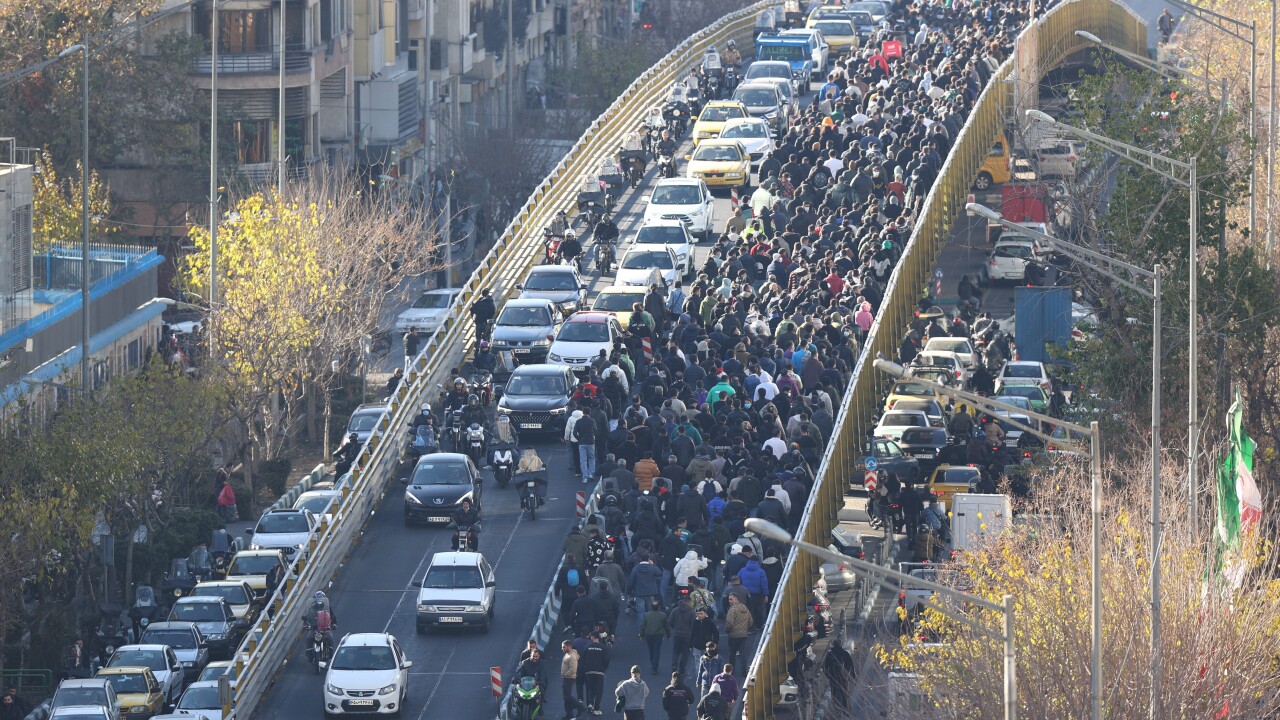


Iranians were able to make phone calls out of the country for the first time in days after authorities restored some communications following a deadly crackdown on nationwide protests. Activists say at least 646 people have been killed and nearly 11,000 detained during two weeks of unrest.
Witnesses describe a heavy security presence in Tehran with burned government buildings and smashed ATMs. Top Iranian officials, including the president and foreign minister, joined pro-government rallies in Tehran on Monday, one of several pro-regime rallies held across Iran.
President Donald Trump is not sitting quietly as Iranian officials crack down on these protests. The president is threatening to impose heavy penalties on countries doing business with Iran during this period.
President Trump has talked about the possibility of diplomacy, but has also discussed a potential military intervention in Iran.
What we do know is the economic pressure that the president is putting on Iran. Trump posted on Truth Social, "Effective immediately, any country doing business with the Islamic Republic of Iran will pay a tariff of 25 percent on any and all business being done with the United States. This order is final and it is conclusive."
More than 600 people have died, according to the Associated Press, citing activists in the region as a direct result of the recent uprising and protests in Iran. President Trump himself has said that Iranians are seeking freedom to the degree in which we haven't seen in years.
RELATED STORY | Iran warns it will target US troops and Israel if the US strikes over protests
White House Press Secretary Karoline Leavitt outlined where things stand and how all options appear to remain on the table.
"I think one thing President Trump is very good at is always keeping all of his options on the table and airstrikes would be one of the many, many options that are on the table for the commander-in-chief," Leavitt said.
"Diplomacy is always the first option for the president. He's told all of you last night that what you're hearing publicly from the Iranian regime is quite differently from the messages the administration is receiving privately and I think the president has an interest in exploring those messages. However, with that said, the president has shown he's unafraid to use military options if and when he deems necessary and nobody knows that better than Iran."
In the first year of this second term, President Trump struck Iranian targets and Iran's nuclear program.
RELATED STORY | Trump says Iran may have crossed red line following deadly crackdown on protests
When any U.S. president is discussing the possibility of military strikes in Iran, it comes with risks. One of those risks is the potential for retaliation from Iran, especially against American forces based at military installations in the region. Retaliation could happen in other forms as well.
Iranian officials have once again emphasized their desire for some sort of peace, but they have also said they are preparing for war as a possibility as well.
