


DANVILLE — Just because you don't see fruit growing in the winter, that doesn't mean work stops around the orchard.
WATCH FULL STORY BELOW
Calvin Beasley is third-generation at his family's farm, Beasley's Orchard in Danville.
"Apples are a year-round crop," Beasley said. "There's always something to do with them."
When you think of apple orchards, you probably picture them in autumn.
In winter, the rows of trees are bare. This is the perfect time for pruning.
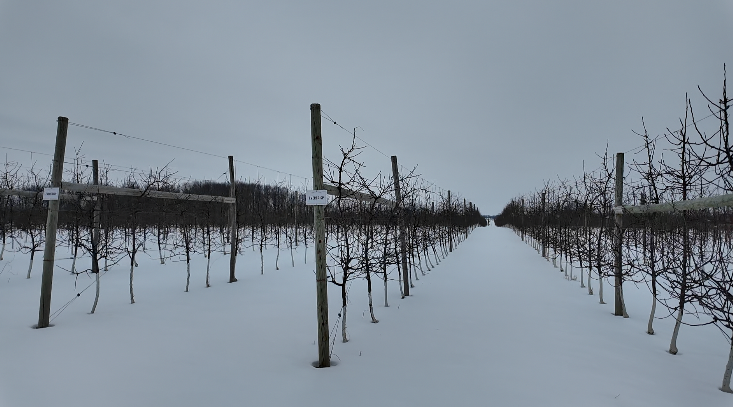
"This is still a big job. We have about 40,000 trees on the farm," Beasley continued. "All of them have to be pruned every year. We start pruning in early December, and we won't finish until usually about the second week of March."
Work goes on, no matter the snow on the ground or the frigid temperatures, since all the work has to happen before the trees start flowering.
It's a cold, slow-going job: workers slowly make their way down a row, going from tree to tree, trimming branches.
"We're trying to open up the canopy to allow for good sunlight penetration, as well as lots of good airflow that helps to increase the fruit size, gives us better fruit color, and then the airflow helps with preventing disease and pest proliferation," Beasley said while working.
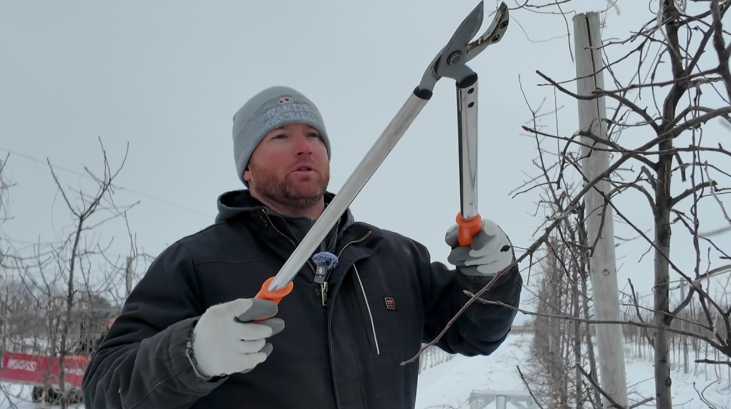
While pruning, the team also cleared out honeyvine milkweed, an invasive vine that crept up many of the trees.
How does Beasley decide which branches make the cut?
"Some of these that are really upright and really long, these are generally not going to be very productive, so we want to take them off," Beasley said.
The shorter branches with fruit spurs on them are the areas that will eventually flower and turn into fruit. These are the areas that need lots of space cleared around them for sunlight and airflow.
During winter, the orchard will also remove older trees that have lower yields.
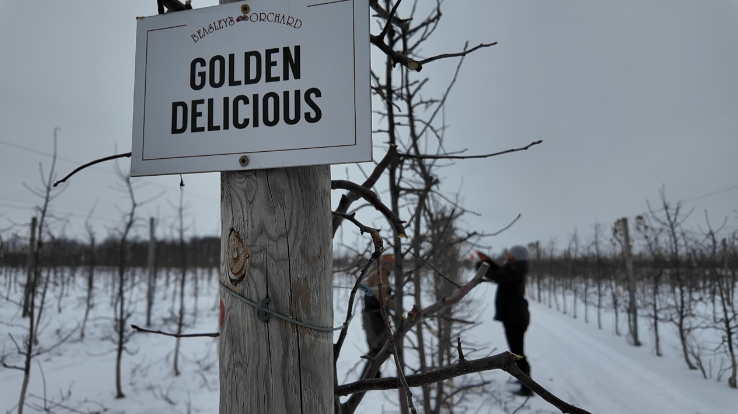
We're a long way from apple season still, but strawberries will be ready sooner. Strawberry plants are already in the ground, just a short distance from the apple trees.
"These are actually dormant for the winter," Beasley explained. "You'll notice that we have all this straw that I'm pulling off the tops of the beds, and this is to protect them from the cold temperatures."
Strawberry plants might be more cold-hardy than you realize.
"Once we got down to about 10 degrees, it would start to be damaged," Beasley explained.
Beasley dug through the snow and the straw to show off one of the crowns of the strawberry plant. This is the area where energy is stored and where flowers will bud in spring.
"We have to put the straw on, usually right around Thanksgiving," Beasley said. "That gives us really good protection, typically down into the low single digits, maybe about zero."
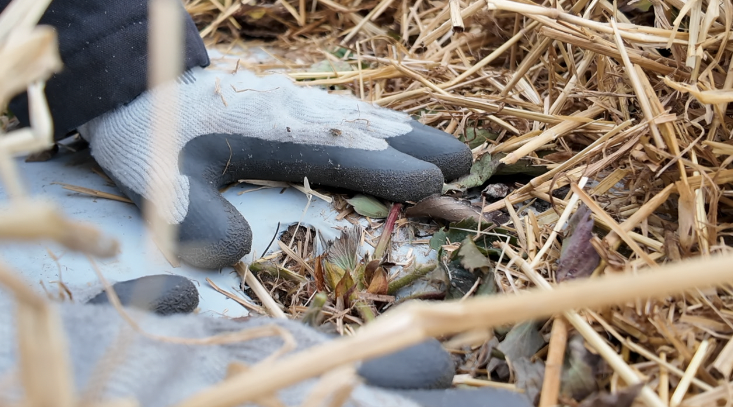
What happened during this most recent cold stretch, when temperatures dropped below zero?
"We were really thankful for the snow," said Beasley.
Snow is another insulating layer for the strawberries. Even though the snow itself is cold, it keeps the ground below warmer.
"We got good coverage with the straw. We aim for about four inches on top of the beds, and then that heavy snow came in before the really cold temps," Beasley shared. "It's about as perfect as it could have gone for us."
In spring, Beasley and his team will start to dig out the plants from the straw to see if there is any damage from winter, but he is optimistic about the current crop.
In the meantime, there's plenty of work to be done still with the apple tree pruning.
"It's a difficult job, but very rewarding at the same time," Beasley said. "It's really kind of fun getting the opportunity to share with other people how their food is grown and show them how much dedication and hard work goes into it."
___
