


As we prepare for temperatures to drop on Friday, livestock farmers have been busy this week prepping their livestock for the extreme cold.
WATCH FULL STORY BELOW
Ron Lemenager is the Beef Extension Specialist and President-Elect of the Indiana Beef Cattle Association. With the next round of winter on the way, he's been focused on keeping his own cattle warm.
"I've been raising cattle all my life," Lemenager said. "Grew up with it."
This fourth-generation farmer has seen all sorts of weather through the years.
"Depending on what the weather does, we'll make those adjustments. If it's going to be a day or two, it's probably not a big deal, but when we start getting into that week-long kind of a cold spell," Lemenager explained, "This is the time that we needed to make some adjustments."
We've had a few temperature swings so far this winter, and Lemenager says this can be tough on cattle's respiratory systems.

This is why Lemenager has been out preparing.
"The windbreak is basically portable corral panels," Lemenager explained of the giant windbreak in the pasture. "When we feed hay, or when we bed with hay, what you find is the cows will actually come over here."
The livestock were mostly hunkered down behind the windbreak, which was filled with clean bedding ahead of the cold.

Having dry bedding means dry cows, which also means warmer cows.
Lemenager broke down some of the science of how much energy cattle need, which depends on temperature.
"A cow with a winter hair coat that's dry has what we call a 'lower critical temperature' of about 32 degrees," Lemenager started. "If we had a wind chill factor of zero, that's 32 degrees difference. For each degree, the energy requirement goes up by one percent, so from 32 down to zero wind chill, that means the energy requirement goes up by 32%."
Cows that are wet or muddy have a lower critical temperature of about 59 degrees, meaning the energy requirement for the animal goes up 59%.
"If we can keep the cattle clean and dry, that works in our advantage, to our advantage, from an animal well-being standpoint, from an animal health standpoint, and from a management standpoint," Lemenager said.
The container where cows get their drinking water has two lids on it. Lemenager will rotate which lid is open on cold days, keeping some heat trapped inside and keeping the water from freezing.

Diet also plays an important part in keeping cattle warm and making up for the higher energy requirement of winter.
"Each cow will get a bit of better quality hay just to kind of increase the energy value of the diet," Lemenager said while tossing a bit of hay into a cow and calf pen.
Right now, Lemenager is in the midst of calving season.
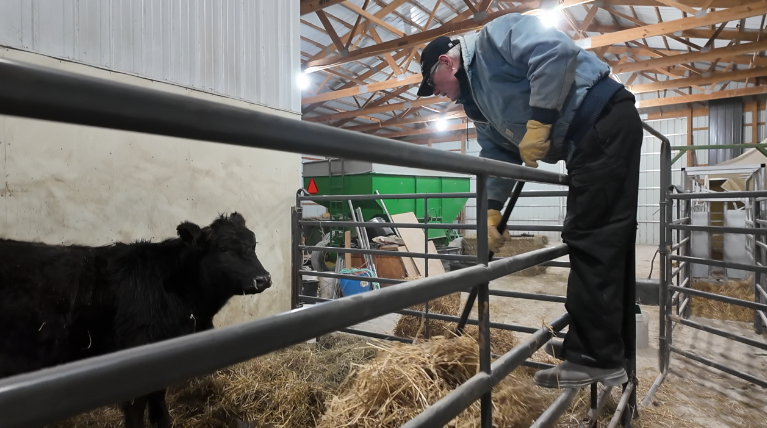
The cows and calves are kept inside a barn, out of the harshest elements. When calves are born, blowers and hairdryers are used to dry the baby.
"On the ears, which are pretty vulnerable to frostbite, we'll use a little hairdryer and make sure that they're nice and warm," Lemenager explained.
Lemenager also showed a makeshift tent covering one of the pens. When a space heater is turned on in this area, it can quickly warm the animals inside.
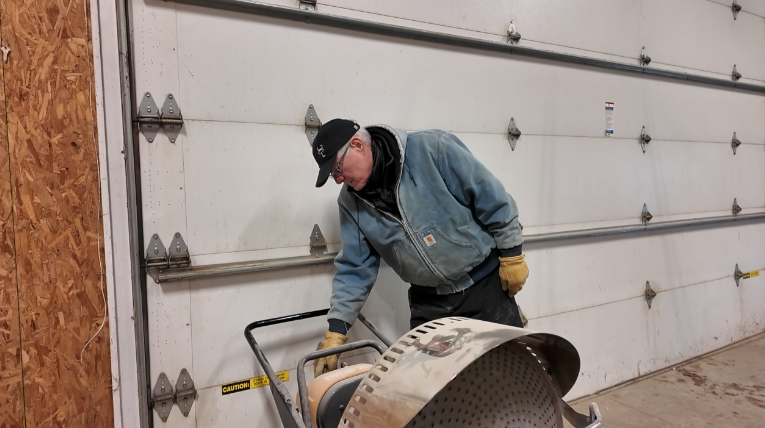
Similar to outdoors, Lemenager makes sure there is warm, clean bedding and that the water tubs are unfrozen.
Even though the preparations for the cold are complete, Lemenager will continue to watch for cows to have their calves with this upcoming cold, and he will continue to watch the livestock outdoors to make sure they stay protected, too, just like he's done for years as a cattleman.
