


INDIANAPOLIS — Have you noticed that it seems brighter recently? Central Indiana has gained a lot of daylight through the month of February, and for many Hoosiers, that means a mental health boost.
WATCH FULL STORY BELOW
"The sunlight kind of perks people up. Spring's coming, you know?" said Tom Potter with a grin. Potter was walking through Holliday Park.
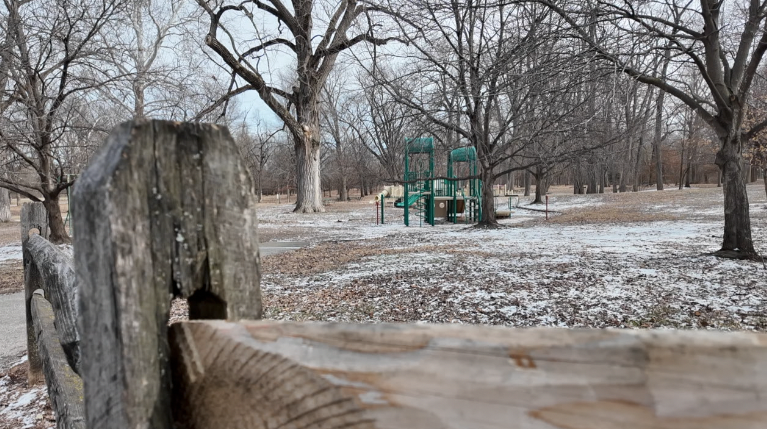
Even though it is still cold with a dusting of snow on the ground, at least there is daylight to go along with it.
"Daylight's fun. Gives us more hours to do things outdoors," Potter continued.
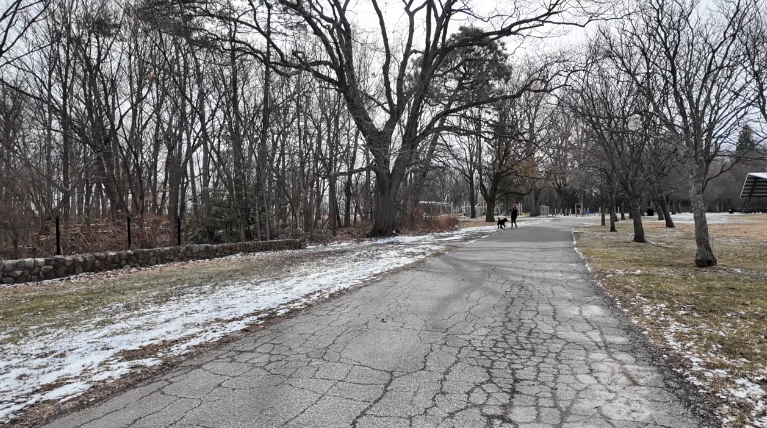
Potter explained that winter isn't all bad for him, as he enjoys the time to see the birds. Potter also enjoys seeing the stars with winter's darkness. However, the dark hours do impact his life.
"In winter, the dog goes out when it's dark out," said Potter. "The spring, it's nice because I can go out and still see things, and not get hit by a car or anything."
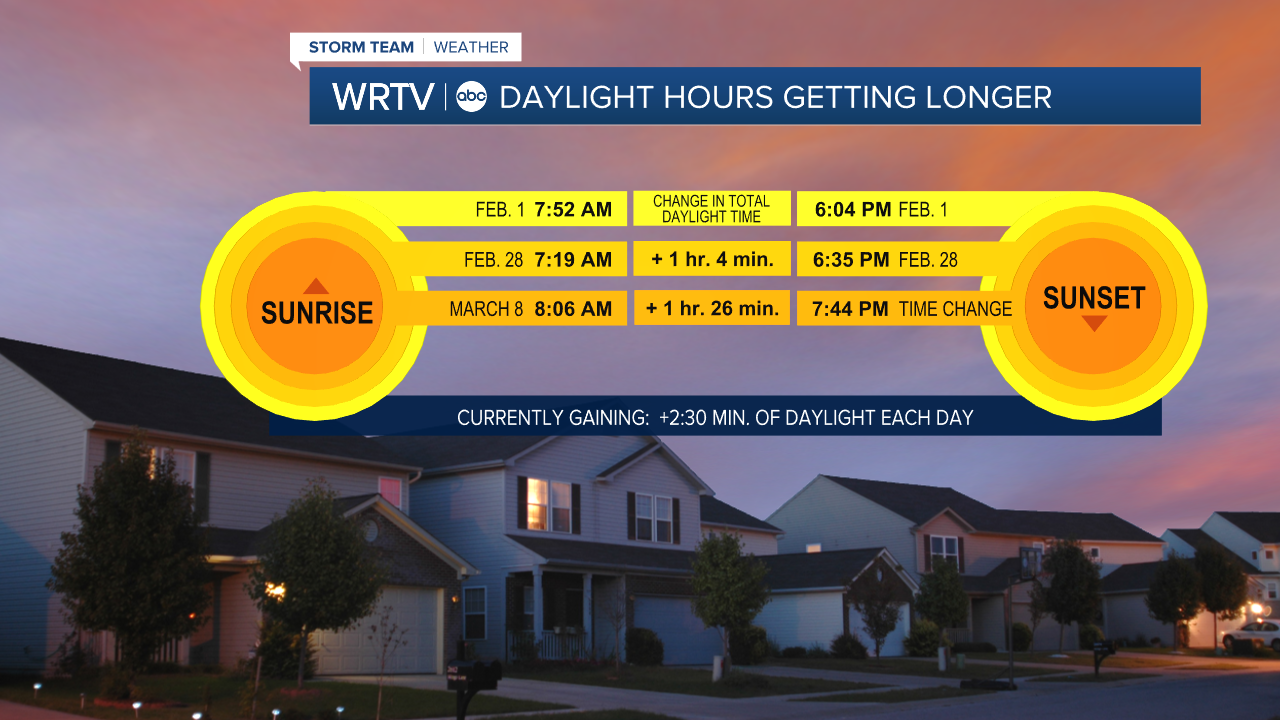
Late February through March is a period where we add a lot of daylight quickly. Each day, around two-and-a-half minutes of daylight gets added in Indianapolis.
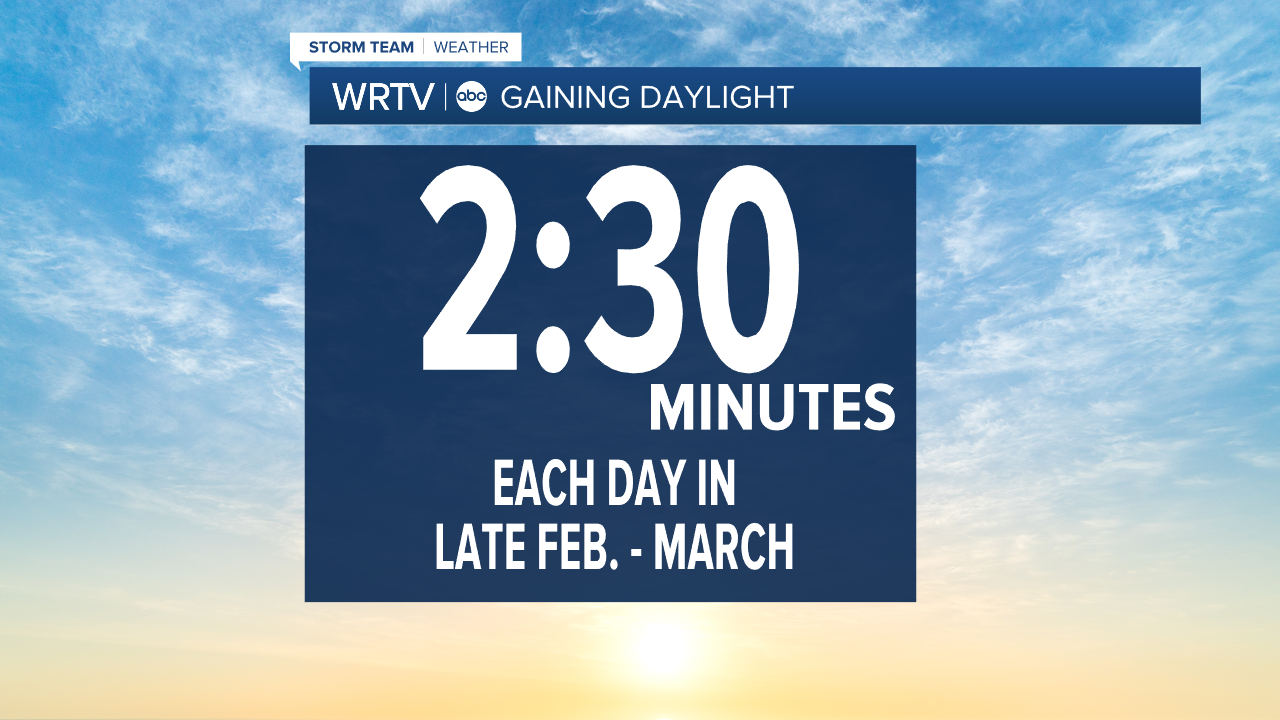
That may seem like a small number, but over the entire month of February, we'll go from around ten hours of daylight to more than eleven hours.
"We don't get a ton of sunlight in the Midwest to begin with, and then when you put winter on top of that, I mean, people's Vitamin D levels are low," explained Dr. Derek Bast.
Bast is a Family Medicine doctor at Franciscan Physician Network.
"Which can hurt your mental health. They can hurt your energy level," Dr. Bast went on to explain.
Dr. Bast knows that the end of winter is a tough time for his patients, as they've already made it through months of cold and snow and darkness.
"This is a real thing. This affects all kinds of people, whether they realize it or not," Dr. Bast said.
"It's kind of gloomy at times," agreed Potter. "It's dark all the time."
While anyone can struggle, Dr. Bast says adolescents, women and older adults tend to struggle more with seasonal affective disorder.
"Some studies have shown that depressive symptoms could increase up to 11%, just because it's the season change," Dr. Bast stated.
If you struggled this year, Dr. Bast encourages you to ask for help.
"Let's enjoy the nicer weather when it comes," Dr. Bast said. "Let's also think about kind of the positive changes we can make in our life to maybe make this better next year, because it's going to happen again next year."
These are a few suggestions from Dr. Bast for those who struggle in winter:
- adding artificial light, like a UV desk light
- adding time outdoors during winter
- adding time for interaction with others
- starting a conversation with your doctor about medication or therapy
We do have a time change coming up on March 8, but even with the clock shifting sunset and sunrise times, we'll continue to add natural daylight, making it seem even brighter as we head into spring.
__
