


MORRISTOWN — Food waste is being turned into clean compost on an industrial scale in Shelby County, even through the middle of winter.
WATCH FULL STORY BELOW
Heat is a catalyst for the compost process, but despite a stretch of below-freezing temperatures recently in central Indiana, Caldwell's Inc. should have plenty of finished compost ready for farmers for spring planting.
Caldwell's, located in Morristown in Shelby County, collects food waste from a variety of sources, like restaurants, schools, retailers like Kroger and Walmart, and food and beverage manufacturers.
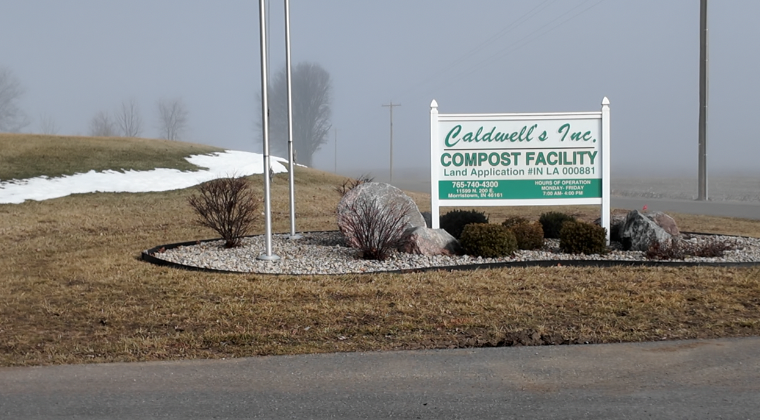
"Typically it's already out of the box, but it didn't make the sale point," Jordan Caldwell, CEO of Caldwell's Inc., explained of materials arriving from grocery stores. "Then it goes into a recycling box and then comes to our facility every evening."
Why are more retailers turning to facilities like Caldwell's Inc.?
"One reason is ESG [ Environmental, Social, and Governance] goals from the large companies," Caldwell explained. "Sustainability and education, people are getting smarter, and they're trying to be good stewards of the ground, stewards of our earth."
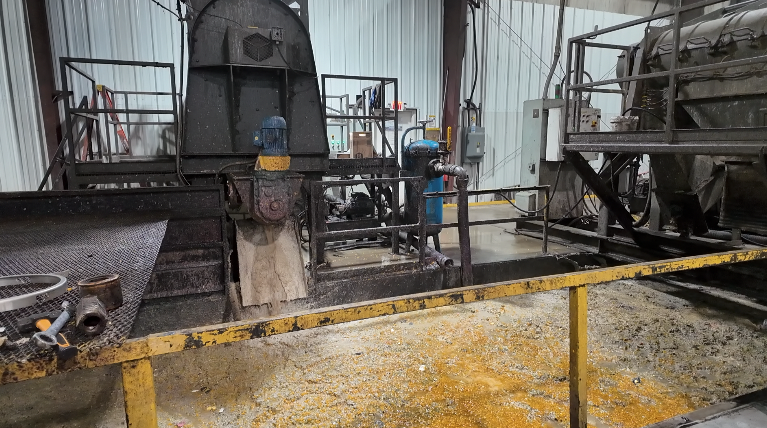
The food is collected in the de-packaging facility, where it is sorted, de-packaged, and pressed through a screen. The liquid food waste drops into a collection pit, then is vacuumed and hauled to Caldwell's compost facility.
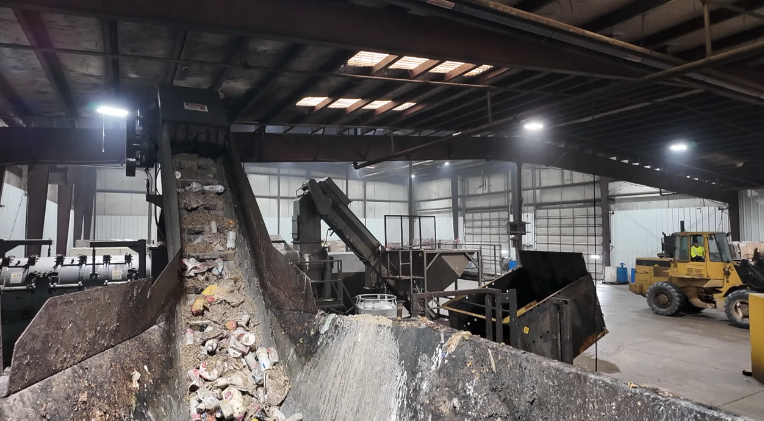
The de-packaging facility operates around the clock, and food leaves this part of the facility in less than 24 hours.
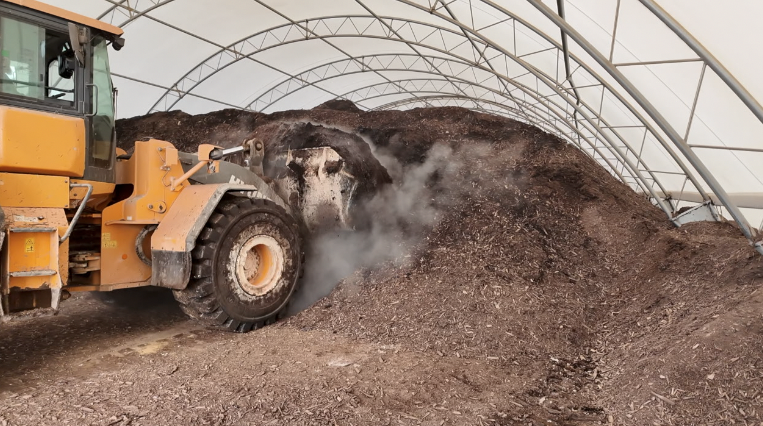
Once at the compost area, the liquid food waste is mixed with wood chips, finished compost and manure.
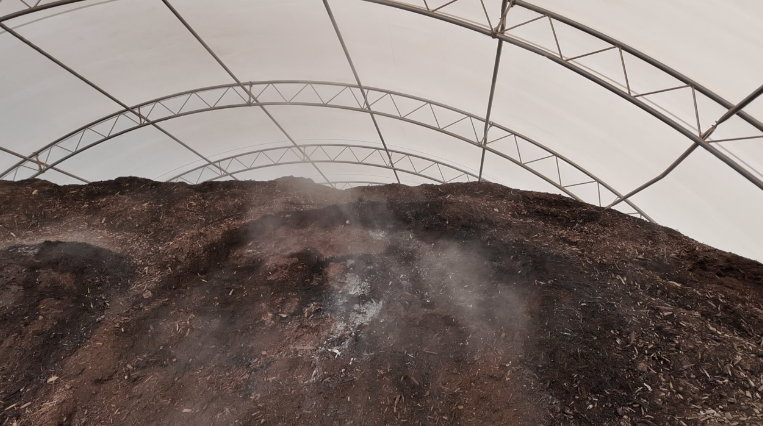
Piles of this mixed product are filled with microbes, which eat the organic material.
"The more it eats, the more it heats up," said Jordan Caldwell.
As piles are composting, the temperatures are taken and the material gets turned or mixed to ensure the composting process continues.
"We're wanting for the temperature to be between 130 and 160 degrees," Caldwell explained.
This temperature range speeds the decomposition.
Caldwell went on to share that sub-zero temperatures can slow the process a bit, but his facility did not lose much time even with our most recent cold stretch.
The whole process of composting takes about 90 days.
"Whatever makes it into the hoop building, that's what's going to go out on the farm ground," Caldwell shared.
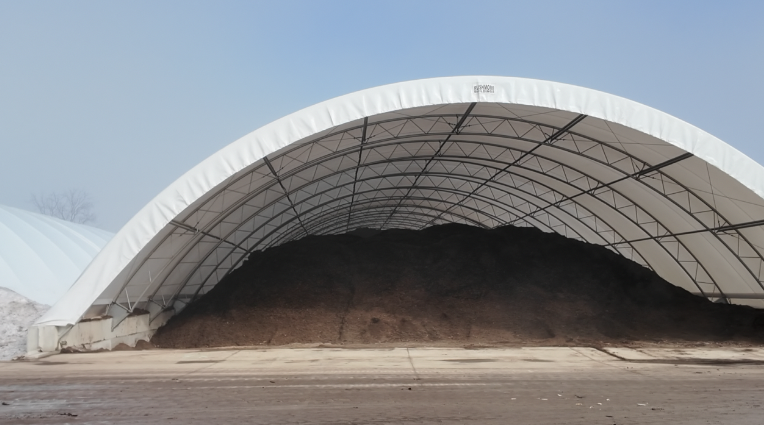
"This is the future. This is the way that we're going to have to go, to take our waste that you and I are creating, and put it back into the land," explained Andrew Fansler.
Fansler has been farming for over 30 years, and he manages the farm land for the Caldwell family.
Fansler explained that traditionally, farmers have used manure as fertilizer, but it has become more difficult for some farmers to get this product.
"In this part of Indiana, Indianapolis has been encroaching on us, every year," Fansler said. "So we don't have a lot of livestock around here, so for farmers in general, if you aren't raising them yourself, it's hard to get. Looking at alternatives like compost, it's a really up-and-coming thing."
Fansler has seen the addition of compost change the land he farms.
"Fertility levels have been going up significantly from previous farmers," Fansler shared. "The yields are increasing, and they're doing this all from our waste."
While Fansler is quick to sing the praises of using compost, he knows it isn't a cost-effective option for many farmers yet.
"You don't see hardly any farmers doing this. It takes work, it takes effort, it takes money," Fansler said. "Right now, the Ag economy is struggling big time. So to do the things to be sustainable, they're tough. It's a really hard market right now for farmers to be able to do this."
Caldwell believes there are about a dozen facilities like his throughout Indiana, and a few hundred nationwide.
___
