



INDIANAPOLIS — Winter weather can have a significant impact on transportation but how does winter weather impact airlines?
For the answer, I visited the Republic Airways Training Center in Carmel.
The building, located right off US-31, houses a giant floor containing eight flight simulators.
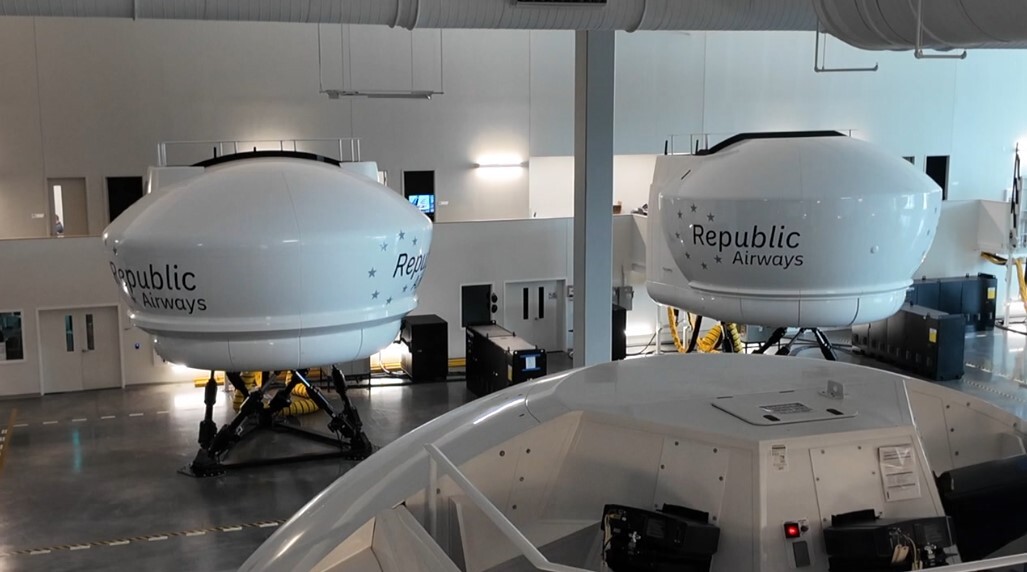
"We're doing training here twenty hours a day, 363 days a year," said Michael Dee.
Dee is the Vice President for Flight Operations for Republic Airways.
Republic pilots travel from all over to train in these flight simulators. Here, they learn how to master a variety of challenges, including weather.
"We train them for all kinds of weather," Dee explained. "We could be training for winter operations in July, or we could be training for thunderstorm operations in December."
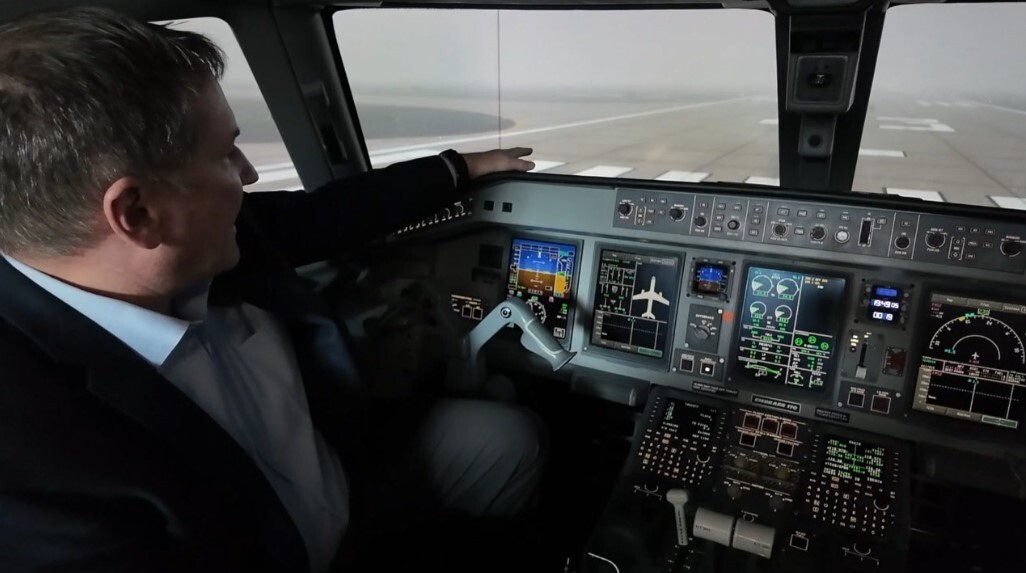
To see everything he talked about, I stepped inside one of the simulators.
While it doesn't look like much on the outside, it feels like you're in an actual cockpit, complete with seats, a windshield, and more dashboard buttons and levers than a non-pilot mind can comprehend.
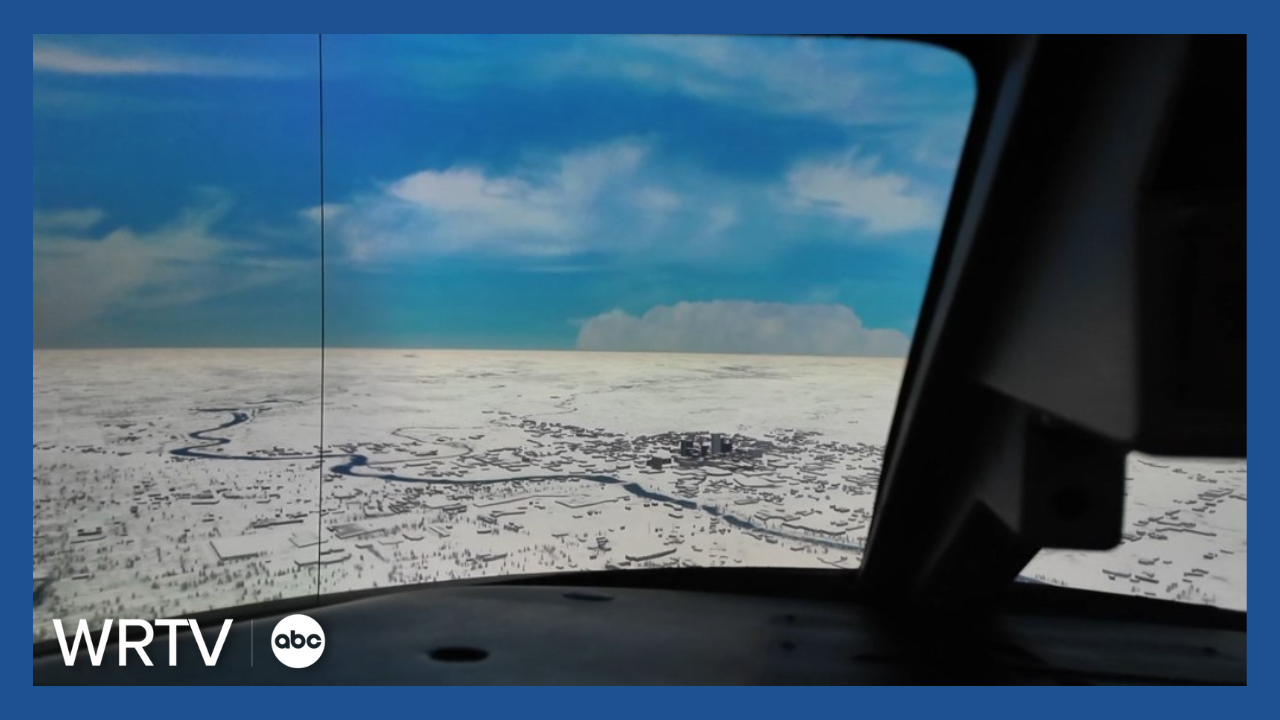
Looking out the windshield, you can see simulated runways and the sky, with a variety of weather.

Dee demonstrated flying through snow and fog, and he showed me what a far-off simulated thunderstorm looked like too.
This is all training to make sure pilots are ready for the real thing during winter.
"Once we start the process of the takeoff roll and get in the air, the plane flies just the same," Dee explained. "The airplane doesn't know it's snowing."
If planes can take off during winter weather, why do there seem to be more delays in winter?
"Getting to the runway is really what is impacted by that weather," Dee continued.
Everything leading to takeoff takes more time in winter, according to Dee.
"Travel to and from the airport takes a little bit longer," Dee shared. "Boarding an aircraft is slower, loading bags is slower, pushing back, and then de-icing is a little bit slower."

Each airport has varying abilities to clear snow.
"Indianapolis, for example, has 60 miles of taxiways that they have to keep clear of snow and ice, so that's really where things start to slow down. Do they have the ability of plow trucks to keep all of that space clear? So it isn't the airplane, but it's the airport that is more impacted for snow events," explained Dee.
What kind of weather impacts Republic the most in winter?
"Nor'easters are significant because it's not only snow, but it's also wind and ice that slow things down," said Dee.
Republic has a dispatch center that focuses solely on monitoring the forecast and updating flight plans as needed.
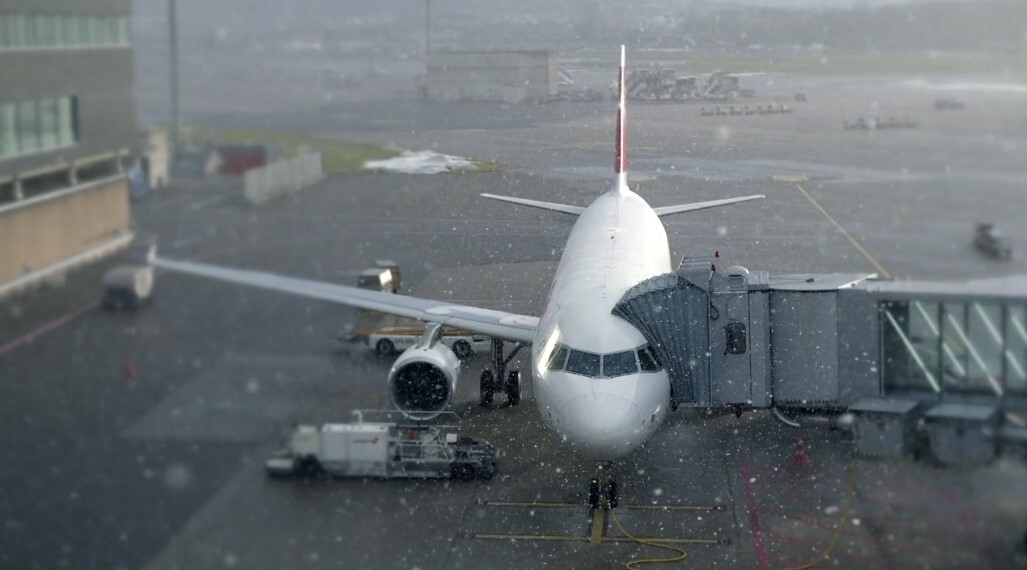
"In the event that the snow is worse than expected, just like a couple days ago, our plan is sort of tactical," Dee shared of updating flights. "We're making changes on the fly. But if it's as expected, the plan is in place in excess of 24 hours prior."
This is done to help passengers.
"If we cancel a flight 24 hours in advance, it's less impactful for that passenger than if we cancel that flight an hour beforehand," Dee said.
In addition to working with the dispatch center on forecasts, Dee also works with crew scheduling. When flights are delayed or canceled, this team ensures flight attendants and pilots have adjusted schedules and a place to stay while in other cities.
The combination of monitoring forecasts, plus training in simulators, keeps the planes in the air.
"Safety is always our primary concern," Dee said. "If it is not safe to operate, any airline is going to pull the plug on that day to make sure that we're in better position for tomorrow."
