


TIPPECANOE COUNTY — A lot of snow and ice has melted across Central Indiana this week. Beyond the impact of feeling more like spring, this melting has impacts on Indiana waterways and farm fields.
WATCH FULL STORY BELOW
Martin Webb is the Deputy Director of Tippecanoe County Emergency Management. He and his team members check ice levels on waterways like Wildcat Creek, the Wabash River and the Tippecanoe River.
As ice melts, it breaks apart into pieces, which can get clogged in the twists and turns of the waterway. These ice jams can then cause flooding.
"That holds the water back, and of course, water has to go somewhere," Webb explained.
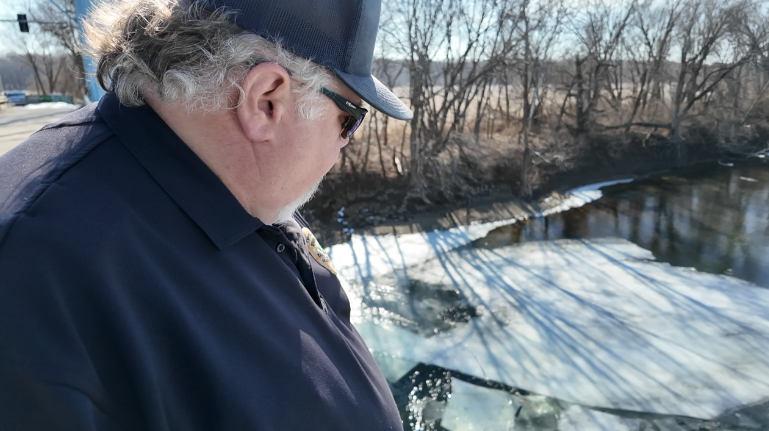
Wildcat Creek has around 20 stops to monitor. It was along Wildcat Creek in 2014 that major flooding happened.
Webb showed some abandoned houses that were impacted in 2014.
"The water had gotten so high that there was chunks of ice on this porch," Webb recalled.
So far in 2026, Webb hasn't found any ice jams.
"The ice here is still nice and smooth," Webb described one portion of Wildcat Creek. "We just have one area here where it's boiling up."

As ice cracks and starts to float down the river, things can change quickly.
"I'm more concerned this year, especially the Wildcat here," Webb shared, "Going into winter season was at a historic low."
Drought means shallow creeks and rivers. This is easier for pieces of ice to catch on and potentially cause a jam.
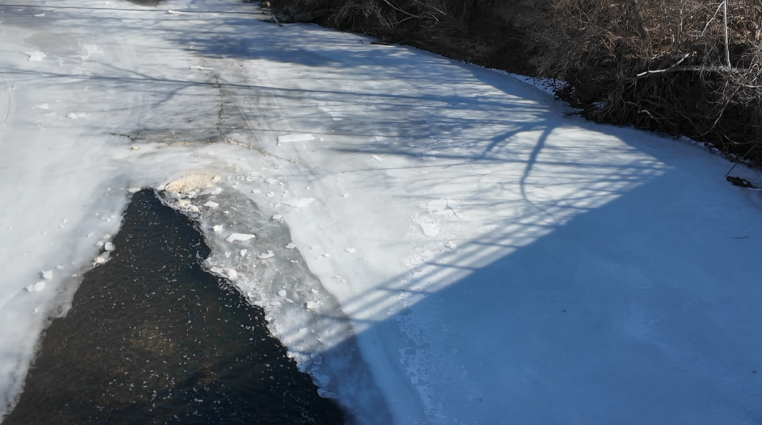
One limiting factor in ice jam formation is a lack of rain.
Overall, how does Webb rate his concern on a scale of one to 10?
"It's running about a five," Webb said.
While Webb watches for danger from ice melting, farmers like Monty Henderson are excited for the thaw.
"Here's a little bit of mud!" Henderson said gleefully while walking through one of his fields.
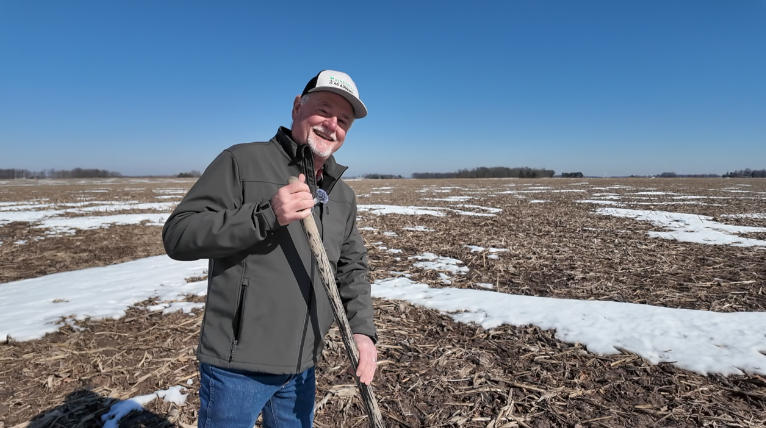
Henderson farms in Tipton County, one of 28 Indiana counties recently designated as a natural disaster area by the United States Department of Agriculture because of extreme drought.
"I think we're around 10 to 12 inches short of rain from the last six months," Henderson said.
Muddy fields mean moisture back in the fields, which is why Henderson was so happy to see it.

A lot of the fields are still frozen, so not all the water is seeping in just yet from the melting snow. Once the water does sink in, it may not be enough to make up for the deficit.
"10 inches of snow makes one inch of rain," Henderson explained. "It's like fueling your tank. We've really emptied the tank in the last six months."
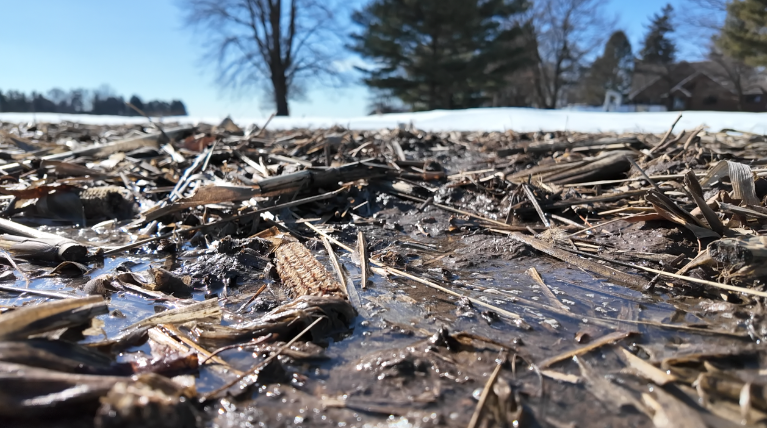
As snow continues to melt, it sets farmers like Henderson up for success come planting season.
"We really want to fill that tank back up and make things much better to get off to a good start in the spring," said Henderson.
___
