


BOONE COUNTY — While Indiana fields might be muddy right now, you only have to dig a little deeper to realize that drought concerns still exist.
The latest Drought Monitor, released January 8, shows that 68% of Indiana is in some form of drought.

This number is up from 55% last week, but is down from 94% three months ago (October 7, 2025).

Drought is concerning for farmers.
"It probably has brought down our yield in this area about ten percent the last couple of years," said grain farmer Jeff Schrier.
Schrier farms in Boone County. He's a fourth-generation farmer and has been farming for over 25 years.
A quick glance at the farm in January may seem like not much is happening, but Schrier gave us a closer look, including what's going through his mind.

"Once the new year hits, you're thinking about that next year," Schrier explained. "Getting your seed ordered, getting your inputs in place, and thinking about how you're going to get profit from your farm in this coming year."
The amount of rain and snow through the winter may dictate what farmers like Schrier order.

"If it looks like it's going to be a really dry year, then maybe you would change the different varieties of crops that you would grow that would be more defensive towards that type of environment," Schrier explained.
Schrier plants cover crops, which remain in the field through winter, to help with soil health.
"Even though the soil is dormant and you don't see much, there's life going on underneath," Schrier explained while digging into the soil. "There's microbes and things growing."
The surface of the field was muddy from recent rain, but six inches underground, the dirt started to crumble. This dry soil is a sign of drought.
"You find cause for concern, but we can only do so much," said Brian Daggy of the drought.
Daggy is a member of Boone County's soil and water board.
Daggy and Schrier walked through a field of green barley. This cover crop helps avoid dramatic losses, like the one Schrier described, from drought.

"Their yields stay more steady in dry years versus wet years, because soils have a resilience that they gain from what the cover crops give them," Daggy explained.
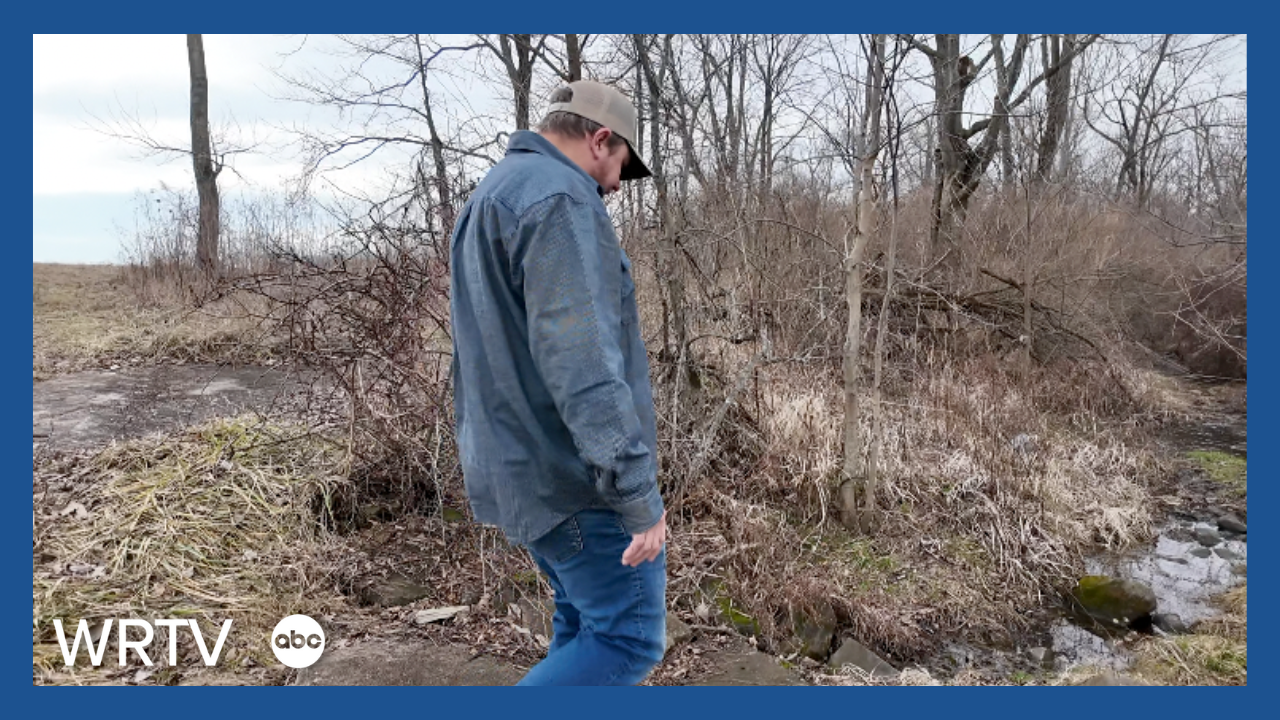
The pair also showed a stream that ran near the field. The farm had a series of plastic drain tiles, which drain water into the stream.
There was a small trickle of water flowing out of the drain. This is an improvement from last fall.
"I was on the stream back when we're harvesting corn," Daggy recalled. "It was actually a little drier then. We've seen some improvement, but there ought to be some actual flow in it now, not just what we see at this point."
The snow season started actively across Central Indiana this year. Schrier is hoping for even more rain and snow before spring planting to help overcome drought conditions.

Drought will impact those outside of the farming community, too.
"It's going to have an impact on anybody that is doing gardening, landscaping work, maintaining perennials, or anything else," Daggy shared. "At some point, they're dependent on the groundwater levels, which are extremely low right now."
Daggy recalled drought years like 1983, 1988, and 2012.
"Typically we do bounce back, and we average out on these things," Daggy said. "That's the great thing about nature, is we do see an averaging of these things in the long run."
When does Daggy think we will even out this time?
"We're more than ten percent down from the normal rainfall amounts in 2025," Daggy explained. "Whether that averages out this spring, or it's next year, we don't know that. That's the concern, is how that happens."
"It's always a gamble on what to expect out of the weather," Schrier agreed.
