




INDIANAPOLIS — If you’ve ever walked into a store, list in tow, with your children and walked out with things you didn’t plan to buy, you’re not alone.
“I talk with parents all the time who feel discouraged or confused when shopping with their kids becomes stressful,” said Kimberly O’Connell, a licensed marriage and family therapist in Indianapolis and mom of three. “The begging, the meltdowns, the ‘just one more thing’ — it wears you down.”

O’Connell says it’s not about bad parenting or kids “acting spoiled.” It’s about the environment you’re both walking into.
“You’re up against a retail system specifically designed to trigger impulse buys, especially in children,” she said. “Items at eye level, character tie-ins, snack displays near checkout — it’s all intentional.”
Why impulse control is tricky for kids
Children can struggle with impulse control because their prefrontal cortex — the part of the brain that manages waiting, planning and delaying gratification — is still developing. For neurodivergent kids, the challenge can be even greater.
Impulse buying, O’Connell emphasizes, is not a character flaw. “It’s a developmental thing,” she said.
Why parents give in
O’Connell says most parents say “yes” for deeply human reasons:
- You’re tired or stressed.
- You want to avoid a public meltdown.
- Your love language is gift-giving.
- You want to give your kids what you didn’t have.
- You’re overstimulated yourself.
“This doesn’t mean you’re ‘too soft,’” O’Connell said. “It means you’re human.”

The “Impulse Buy Audit” — YES / NO / MAYBE
O’Connell teaches families a simple system she calls the “Impulse Buy Audit.” It works for toddlers through teenagers — and for neurodivergent children, too.
YES — Green light items. Fits the budget, needed, planned, or small things that bring joy.
NO — Firm boundaries. Out of budget, doesn’t fit values, contributes to clutter, too messy or noisy, or your child is already disregulated.
MAYBE — The pause button. For when you need time, want to check prices, or aren’t sure if it fits values. The power of “maybe,” O’Connell says, is that it delays the decision — shifting it away from impulse.
Example phrases parents can use from O'Connell:
- “Let’s put it in the maybe category and check at the end.”
- “That’s outside our budget today. It’s a no this time.”
- “Your feelings make sense. The answer is still no, and I’m right here.”
Give kids a budget and a job
Instead of “we’ll see,” O’Connell recommends giving kids a set budget — $3 to $5 for younger children, $5 to $10 for older kids, or more if they use allowance.

If the item they want costs more, they can save for it, bring their own money, or wait until another trip.
Engaging kids in a task during shopping can also reduce grabbing. O'Connell says they can:
- Carry the shopping list and cross items off.
- Find items by color, number or letter.
- Compare prices.
- Push the cart (if safe).
Predictability is key
Before you walk into the store, O’Connell says, tell your child:
- What you’re there to buy.
- What you’re not buying.
- If today is a “yes,” “no” or “maybe” day.
- How long the trip will take.
- How the system works.
“Thirty seconds of connection before you walk in can help the next 30 minutes in the store,” O’Connell said.
Kaitlyn's test run with Presley
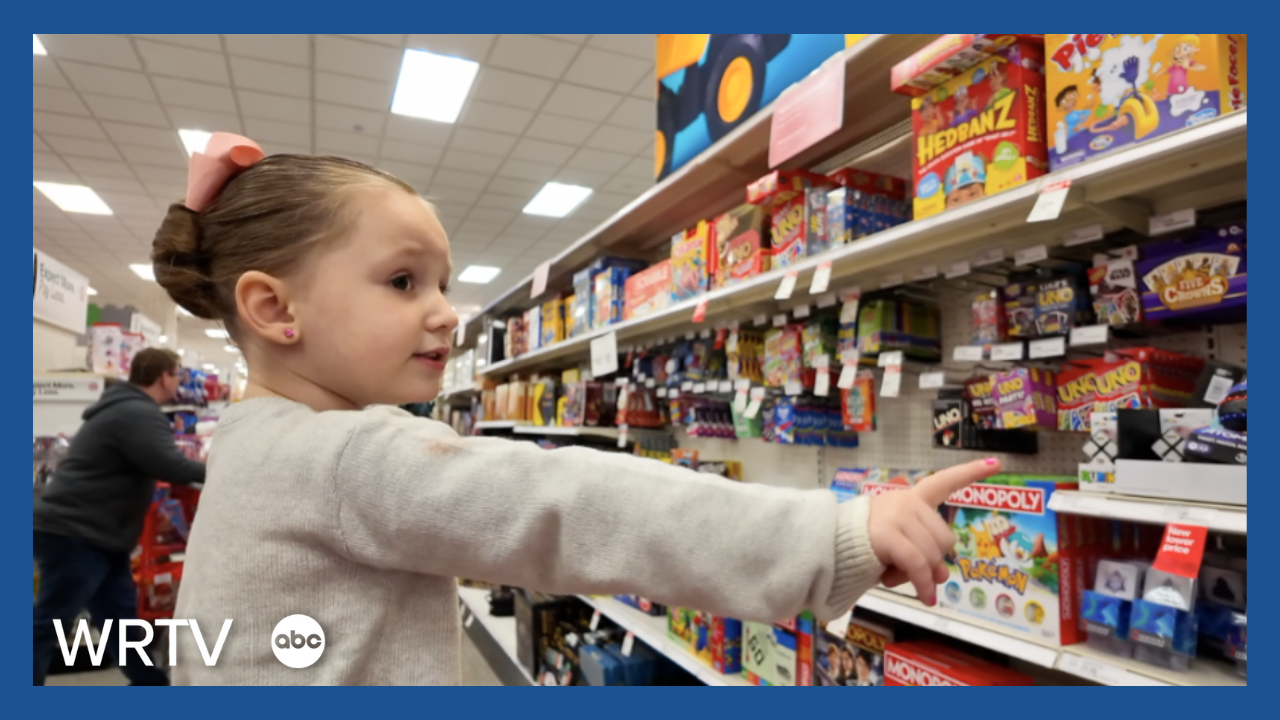
WRTV's Kaitlyn Kendall decided to put O’Connell’s advice to the test. She and her 3-year-old daughter, Presley, were heading to the store for a “no day.” Kaitlyn set expectations on the way, but the second they arrived, Presley wanted everything in sight.

She tried the tactics: giving Presley a job, letting her take pictures of items she liked for her “wish list,” and staying consistent. She still asked for all the things, but they avoided a major meltdown. The pair left with just one small piece of candy — which technically broke the “no day” rules.
Presley just laughed and said, “I knew it.”
When it gets hard
Even with a plan, kids will still protest or negotiate; parents will still feel tempted to give in. That doesn’t mean the system isn’t working.
“You’re teaching life skills — emotional regulation, boundary acceptance, patience, gratitude,” O’Connell said. “And yes, once in a while, it’s OK to break your own rule and spoil them for the right reasons. Just make that moment intentional and special.”
Bottom line: Stores are built to spark impulse. But with a quick plan, clear boundaries, and a focus on connection, you can shop smarter, stress less, and teach your child skills that last well beyond checkout.
