

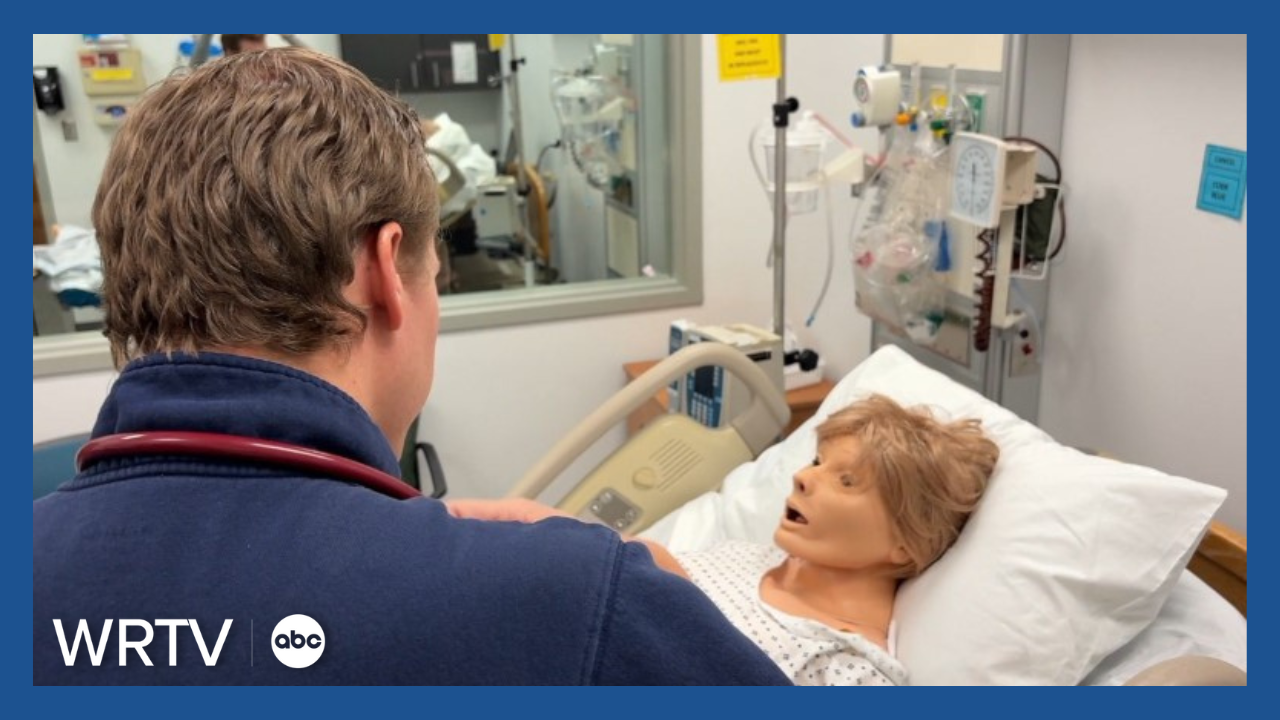



INDIANAPOLIS — Inside the simulation lab at the University of Indianapolis, mannequins become patients and nursing students take the lead in responding to emergencies.
The new Adult-Gerontology Acute Care Nurse Practitioner program is designed to prepare nurses to work in hospitals treating patients ages 13 and older in acute care settings.
Wendy Stoelting-Gettelfinger, professor and acute care nurse practitioner, said the training addresses an urgent workforce need.
“We are facing, if you look at the demographics, we're facing a physician shortage here in the next 25, 30 years in particular,” she said.
The hybrid program begins with virtual foundational classes, then transitions to in-person specialty training.
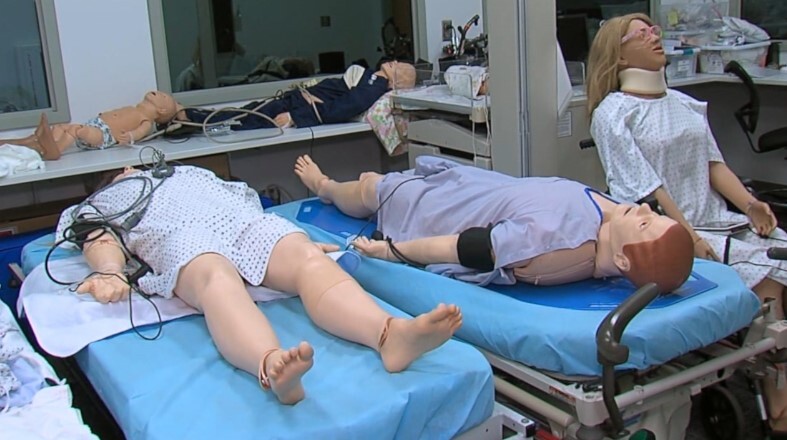
Stoelting-Gettelfinger said simulation allows students to learn critical skills without putting actual patients at risk.
“Well, it helps students in a very safe environment to learn critical skills, putting in chest tubes, putting in central lines, for example, being able to run a mega code, being able to intubate under pressure in a simulated scenario but not a live patient," she said.
In one scenario, the team responds to a pregnant patient mannequin complaining of illness and shortness of breath.
First-year student Jake Goodwin has worked in emergency and intensive care since 2018.
“For the whole night you're the one there, right? You don't always have a nurse practitioner next to you. You're the one. The eyes, the ears, listening for everything and watching everything and maintaining everything, so I really enjoy doing all that," Goodwin said.
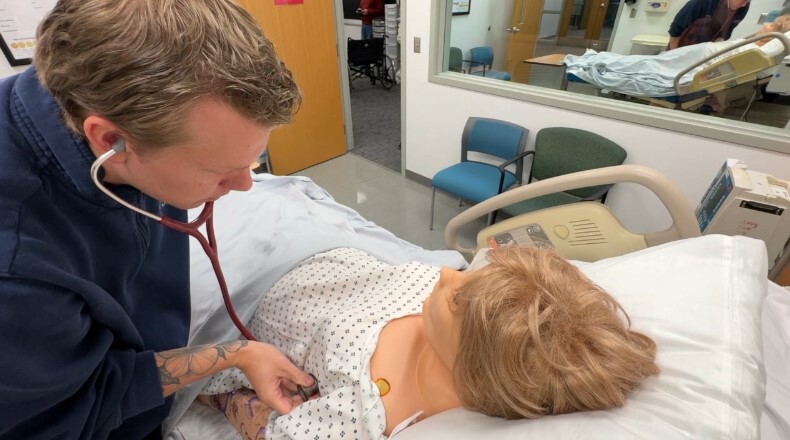
Goodwin added that the program prepares students to make decisions and lead. "To come here, make mistakes here on a simulation, that way you're not making those mistakes in the real world. And I am able to get through this with other people,” he said.
Both Goodwin and Stoelting-Gettelfinger said the program comes at a time of shortages in both physicians and nurses.
“It's kind of twofold. Yes, there's a physician shortage, but also a nurse shortage,” Goodwin said.
“Well then, you could look at kind of what we're looking at now, where there's higher and higher ratios of patients to providers. There's only so many providers and there's a lot of patients. So hopefully by having more providers to patient ratio you provide better, safer care,” Stoelting-Gettelfinger said.
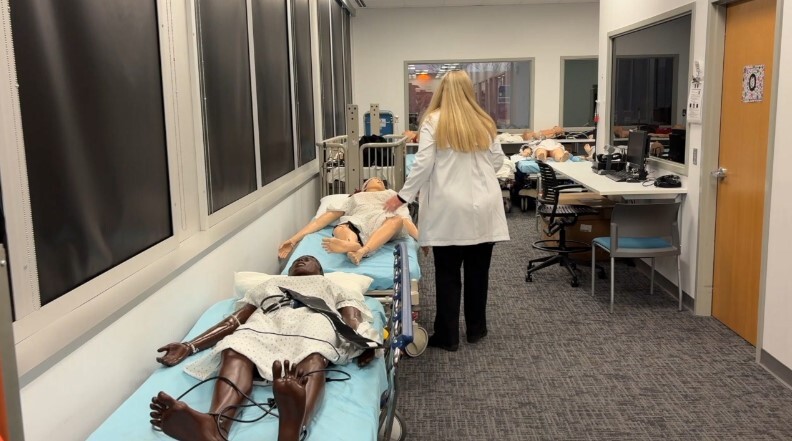
Without more providers, she said, patients could face unsafe delays.
“You would see people waiting for care. Longer wait times in the emergency rooms who don't have the time to wait,” she said.
The program takes eight consecutive semesters — two years and seven months — to complete, with 44 credit hours and 750 clinical hours.
“Hopefully by improving and getting better, more providers to help meet the gap in care," Stoelting-Gettelfinger said. "The ultimate goal is to improve patient care, take better care of our patients. We want to graduate safe and ready providers that are ready to perform the minute they graduate, pass their certification exams, and are safe. So hopefully that is the goal.”
