
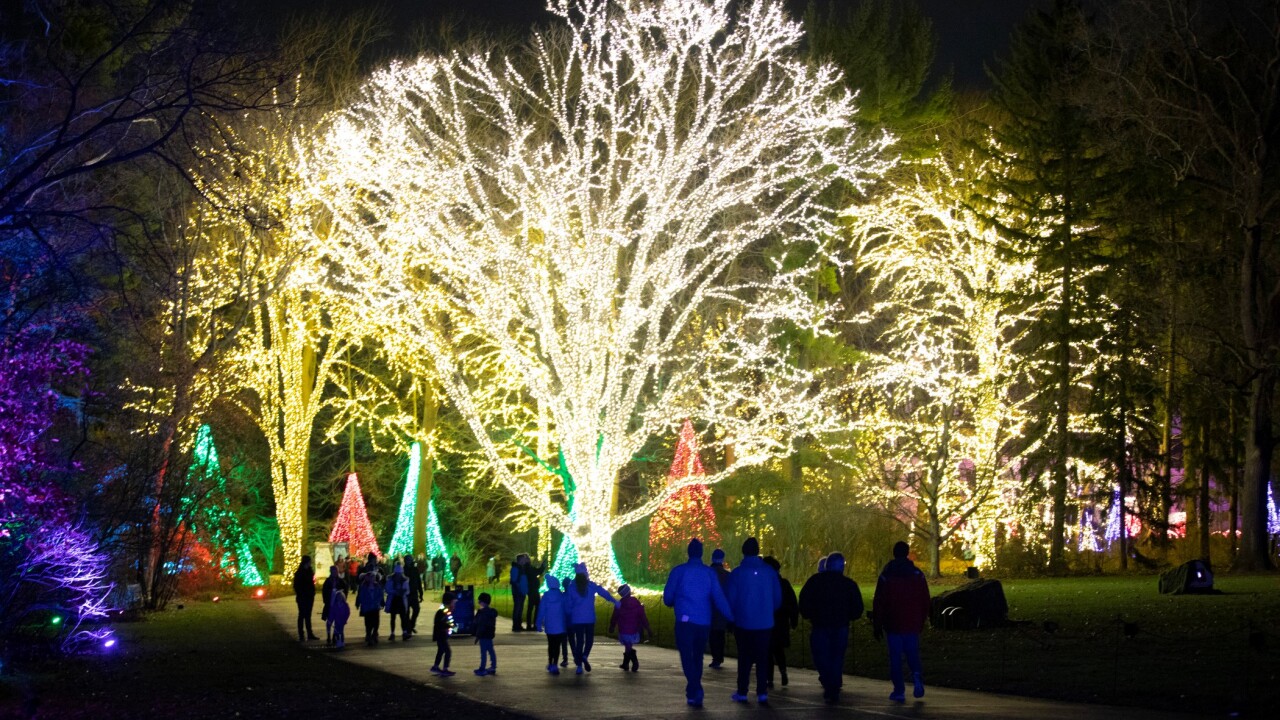

INDIANAPOLIS — An Indianapolis winter tradition is bringing back old favorites and new attractions for its sixth year.
Winterlights will be at Newfields from November 20 through January 8. 1.5 million lights will illuminate The Garden at Newfields.
New this year, guests can stroll through the new Glowing Garden featuring hundreds of color blossoms illuminating the path to the Snowflake Bridge. Near Lilly House, Astraeus, an installation by local artists Owens + Crawley will light the way outside the historic home. Across from Garden Terrace, Big Piñata by the art collective Happy Rebels will debut at Winterlights. This sculpture is inspired by Las Posadas, a festival traditionally celebrated in Mexico and Latin America.
Visitors can experience multiple partner events as part of Winterlights, and there are also two new premium ticket options for visitors — the Premier Ticket and the Winterwonder Pass.
General Ticket Information:
- Public Adults $29 / Senior (55+) $25 / Public Youth (ages 6-17) $22 / Free for children 5 and under
- Member Adults $22 / Member Youth (6-17) $15 / Free for children 5 and under
- Access Pass tickets are $2 per person
- Premiere Ticket: Public $49 / Member $44
- Winterwonder Pass: Public $119 / Members $114
For more information on tickets and the Winterlights event, click here.
-

Charges filed against semi-truck driver following death of Delaware Co deputy
The Delaware County prosecutor has filed criminal charges following the November 2025 death of Cpl. Blake Reynolds.
Katherine Legge aims for fifth Indy 500 start
Katherine Legge will aim to make her fifth Indianapolis 500 start in May. She will compete in the No. 11 Chevrolet with primary sponsorship from longtime partner e.l.f. Cosmetics.
1-year-old child dead, 2 injured in crash near Marian University
A 1-year-old child is dead following a crash that happened Sunday afternoon near Marian University on Indy’s north side.
Indiana congressman recounts shooting at White House Correspondents’ Dinner
An Indiana lawmaker who was at the White House Correspondents’ dinner on Saturday when gunfire erupted is sharing his experience.


