


INDIANA — The federal government has stopped funding the COVID-19 Uninsured Program, meaning it no longer pays for COVID testing and treatment for uninsured Americans.
This comes after lawmakers in Washington failed to pass another COVID relief spending package.
The Uninsured Program is run through the Health Resources and Services Administration, which will also stop processing claims for vaccinations on Tuesday due to a lack of funds.
Fishers Health Department director Monica Heltz says that her department will likely roll COVID vaccinations into other vaccine schedules.
“You should still be able to get the treatments and services you need, in some form or fashion. It's just not going to be quite as easy. You'll just do it the same way you get all your other medical treatments,” she said.
But for the approximately 28 million Americans living without medical insurance, these new hurdles could be significant. Drug companies are rolling out second boosters and talking about vaccines for children under the age of five. Experts say that cutting off the funding now would only increase disparities in access to health care.
“We must find a way to remember, as the scripture teaches us, the least of these. The least of these are those that are unemployed, the least of these are those that are underemployed, and the least of these are those who are still afraid to get the vaccination,” said Pastor Stephen Clay, state president of National Action Network.
Clay has been working to get shots in arms with free clinics over the last week. He talked to many people who waited to get the shot because they were afraid. He worries that for those who are still on the fence, it might be too late unless the funding is restored.
Patrick Glew of the Indiana Immunization Coalition believes that the effects of this could spread much further than just the uninsured.
“In all likelihood, overall infection rates would increase. We know the surveillance programs would be affected, too, so we wouldn't have a sense of all the people we were missing,” Glew said.
Pastor Clay has an idea of who would slip through the cracks. According to the U.S. Census Bureau, Black Americans and Hispanic Americans are uninsured at much higher rates than White Americans and Asian Americans.
“The disparity for African Americans and people of color will be cataclysmic,” said Clay.
Fishers resident Jasmine Bailey got her first shot on Thursday after being nervous for months. She says that knowing it was free and easily accessible played a huge part in her decision.
“A lot. It had a lot to do with it. I didn't think twice,” she said.
If the shot was harder to access, or expensive, Bailey said she probably wouldn’t have faced her fear and gotten the jab.
As the world returns to normal, Pastor Clay hopes that lawmakers in Washington will choose to build a better normal — one that creates equity in health care for all Americans.
“I don't know if going back to past practices on a number of fronts is beneficial to people of color and minorities in general. We must not do that at the expense of leaving poor people and people of color behind. I don't think that would be wise," he said.
The Indiana Immunization Coalition will continue to offer vaccinations and will even cover the cost for the uninsured after federal funding runs out. Visit its website for a schedule and instructions on how you can sign up.
-
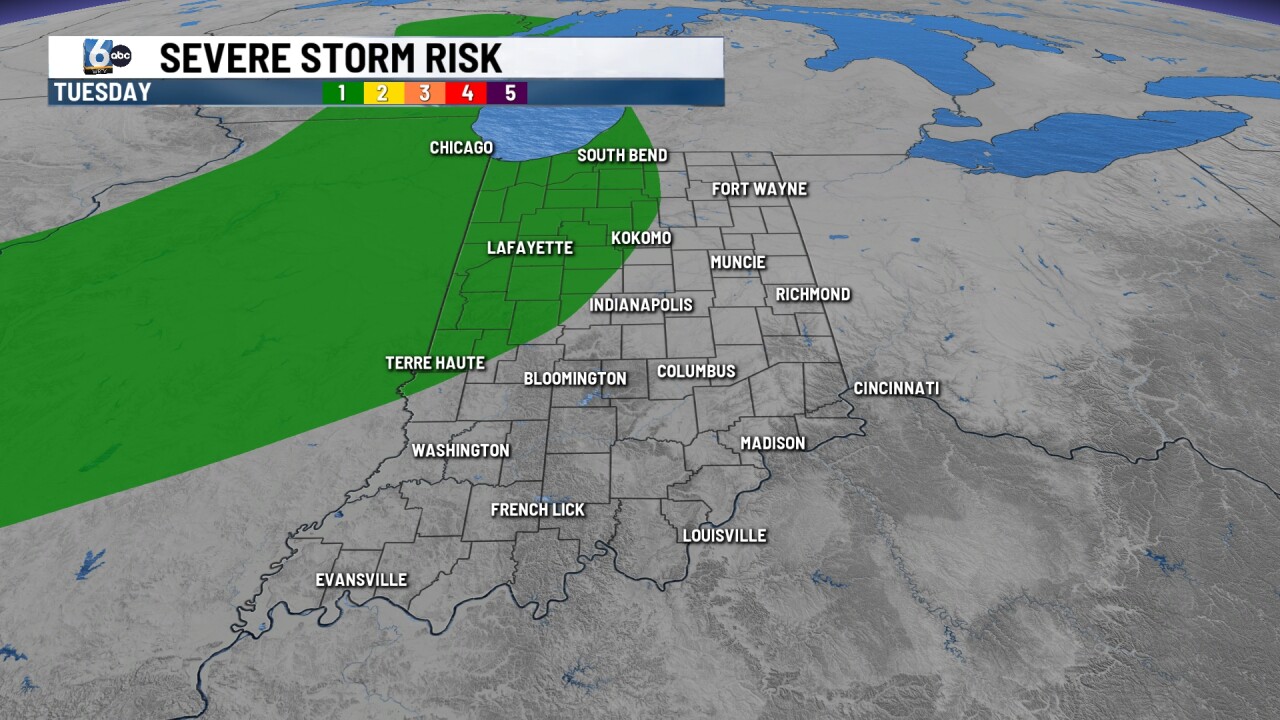
Terrific Tuesday, storms arrive overnight
A terrific Tuesday with sunny skies expected today. Rain chances will arrive but not until later this evening.
Terrific Tuesday, storms arrive overnight

Police crackdown on illegal spinning in Indianapolis
Indianapolis Metropolitan Police Department and Indiana State Police cracked down on illegal spinning over the weekend on the city's west side.
Hoosiers celebrate national championship at the White House
IU was honored at the White House Monday afternoon as President Donald Trump introduced them to a crowd of supporters and media on the South Lawn.


