


INDIANAPOLIS — The city provided an update Wednesday night on its gun violence reduction strategy after months of touting its Peacemaker program.
Lauren Rodriguez, director of Indianapolis' Office of Public Health and Safety, presented results of the strategy to the city-county council committee on public safety and criminal justice.
“Our community knows that we need this additional support,” Rodriguez said.
Funding only became available in January, but the programming is already underway. The city has hired 42 of 50 peacemakers, many of whom are already trained and on the streets.
“It warms my heart to see how many people have applied for these positions that we have,” Rodriguez said.
The group was brought in as consultants to identify the most effective and efficient ways for Indianapolis to use its funding.
“The growth and expansion that we've seen in Indianapolis is really better than we've seen than in any other city in the country,” said David Muhammad, executive director of the National Institute for Criminal Justice Reform.
“We discovered there's a small number of people involved at very highest risk of gun violence. About 65% of all shootings in this city involve people with the same set of risk factors,” Muhammad said. “The violence is predictable, the people are identifiable, and therefore, it is preventable."
Those factors include gang affiliation, unemployment, and lack of high school education, among other things. If someone has six of the eight risk factors, they’re considered high-risk.
There are three different kinds of peacemakers trained to identify those high-risk people and get them help.
- Interrupters work to find situations that could turn deadly and diffuse them.
- Outreach workers identify those high-risk people and bring them into the peacemaker programming as “fellows.”
- Life coaches form personal relationships with the fellows, helping them to identify and achieve their goals and access services.
Program leaders say that the full effects could take many years to come to fruition, but it’s showing early signs of success. A city spokesperson says homicides are down 25% from last year, and that’s only the quantifiable data. They say that the success of this program is also measured in lives saved.
Rodriguez shared with the council an early success story: a fellow wanted to regain custody of their children. A life coach helped the fellow overcome their stigma about accessing mental health services. That person is now seeking help.
Muhammad says there are many similar stories.
“There's another incident of an outreach worker providing Narcan to someone experiencing an overdose. The reason he had Narcan on him was because of his training,” he said.
-

National Guard: First members of new military police force ready for deployment
Indiana State Police Superintendent Anthony Scott on Tuesday said the first 40 National Guard personnel had completed the training, and a second group of 40 will begin their training in July.
Speedway businesses prepare for Indy 500
Businesses in the Marion County town of Speedway on Tuesday were ramping up operations as they prepared for the arrival of hundreds of thousands of fans for the Indianapolis 500.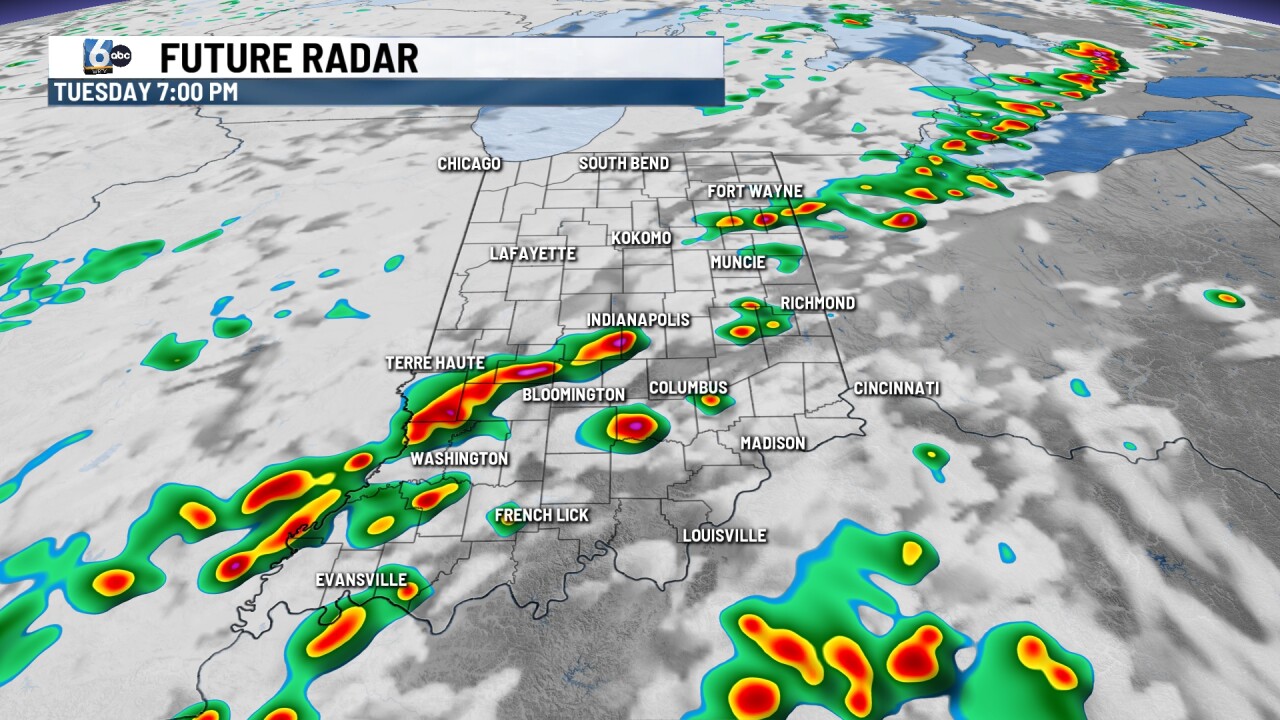
ADVISORY: 42 Indiana counties under severe thunderstorm watch
Forty-two Indiana counties are under a severe thunderstorm watch until 10 p.m. Tuesday ET, the National Weather Service says.
Elderly woman dies after fighting shift lead at Tim Hortons in Fort Wayne
No arrests have been made after an older woman who became involved in a physical fight with employees at a Tim Hortons died from her injuries.


