


INDIANAPOLIS — Indiana State Police has identified the man behind the "I-65 Killer," also known as the "Days Inn Killer," who killed at least three motel clerks in the 1980s and 90s.
On March 3, 1989, the man killed Jeanne Gilbert and Margret Gill. Both of them were working at Days Inn in Indiana. Gilbert was working as a night clerk at the Days Inn in Remington and Gill was working at the Days Inn in Merrillville, according to Indiana State Police.
The man also raped and killed Vicki Lucille Heath at the Super 8 Motel in Elizabethtown, Kentucky.
Another woman working in Columbus was sexually assaulted and robbed on Jan. 2, 1990, ISP Sgt. Glen Fifield said. She was the only known victim who survived.

On Tuesday, Fifield identified the killer as Harry Edward Greenwell. He died of cancer in January 2013.


The FBI released the following timeline of events and information.
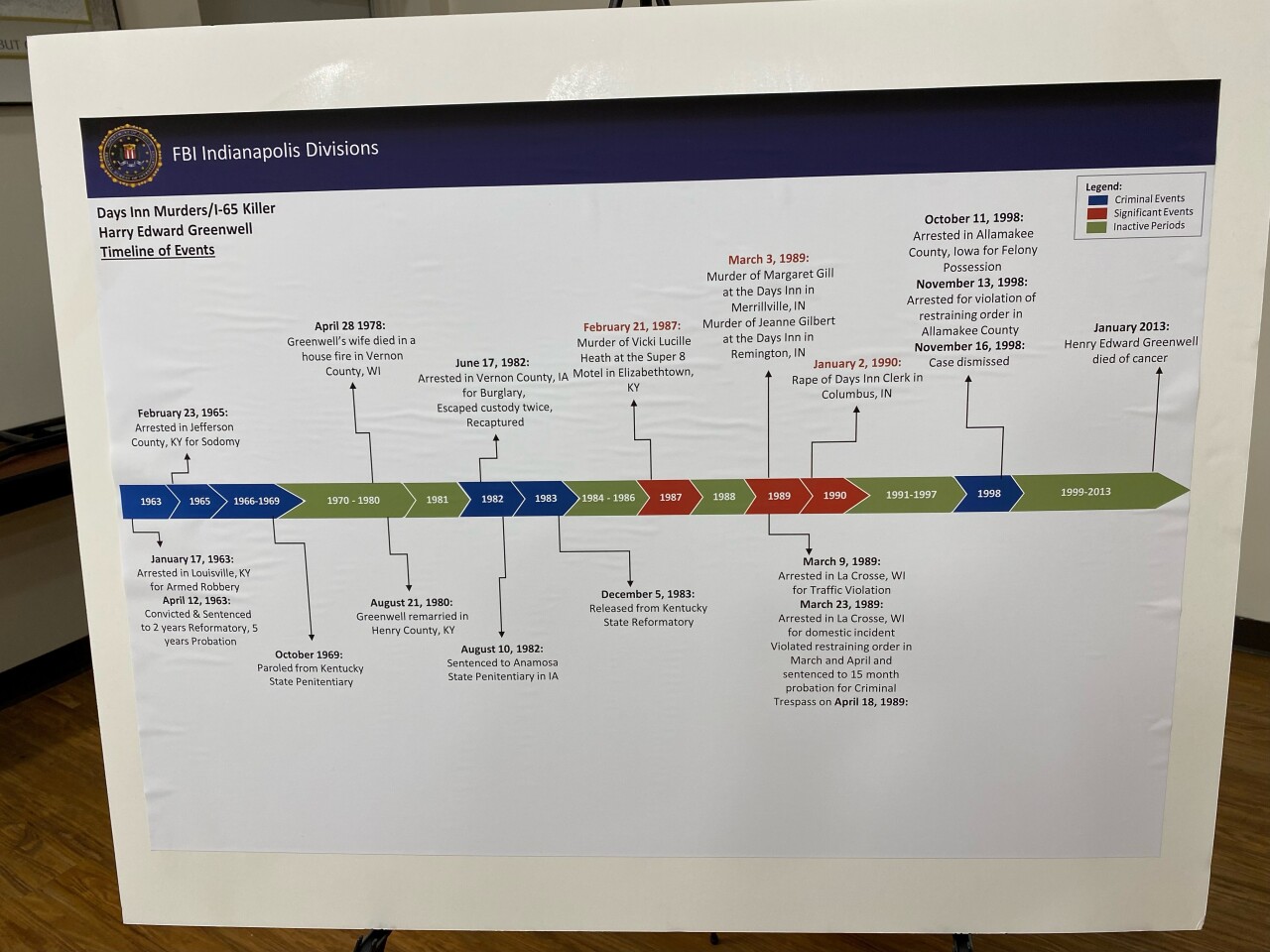
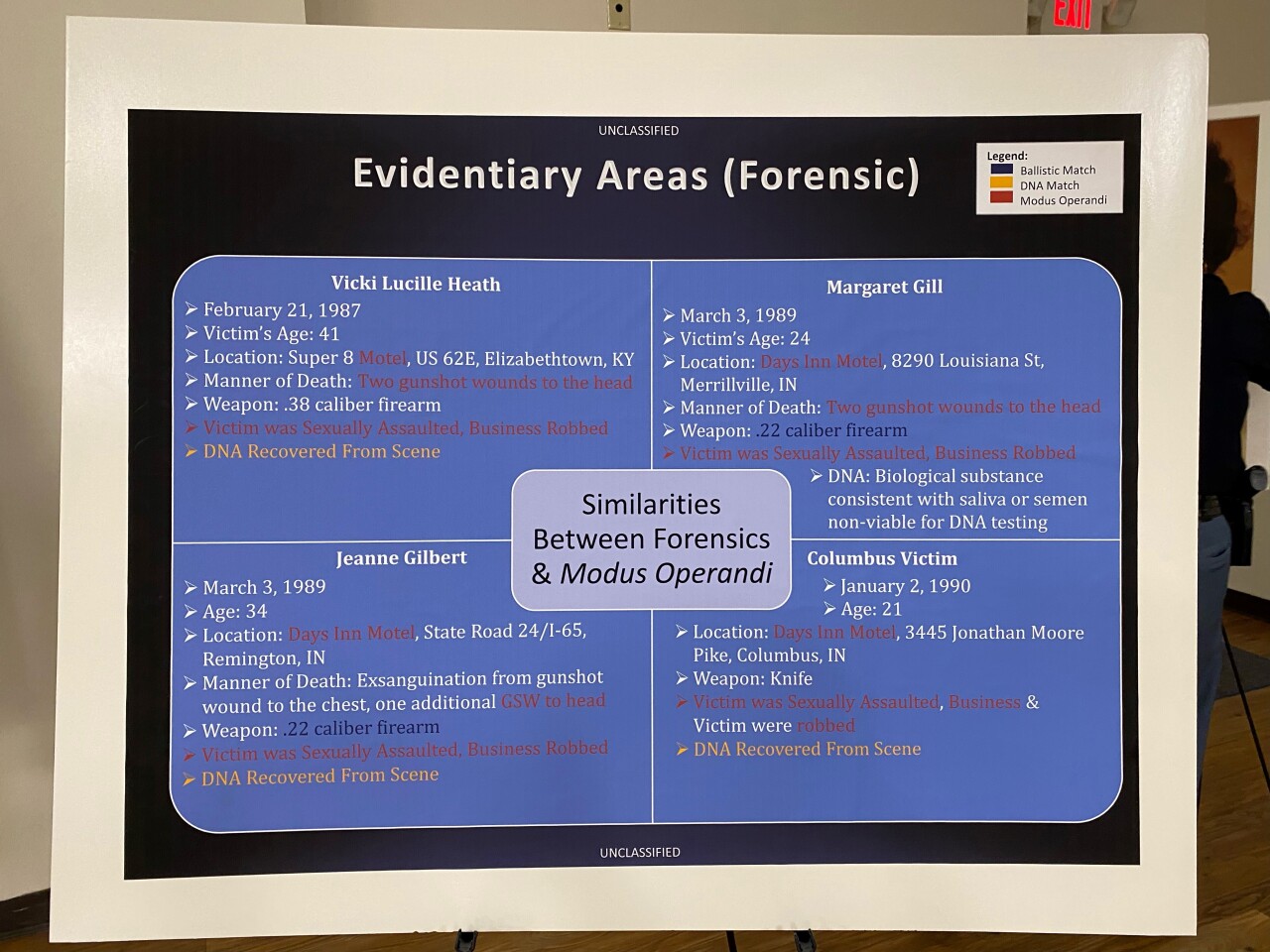
Investigators are working with law enforcement agencies across the country to determine if Greenwell was a suspect in any other cases.

On Tuesday, personnel from Indiana State Police, the FBI and Elizabethtown Police Department are scheduled to provide an update on the cold cases. Several other law enforcement agencies also attended.
-

Jury convicts 62-year-old Marion man for Muncie pawn shop attack
A 62-year-old man from Marion, Indiana, was convicted of attempted murder, aggravated battery, and other felonies for attacking an employee in 2024 at KT Pawn in Muncie with a wrench
Indiana University unveils memorial sculpture of Ryan White
Indiana University has unveiled a permanent memorial sculpture honoring HIV and AIDS activist Ryan White at the Indiana Memorial Union in Bloomington.
Person dies in motorcycle, SUV crash at Harding Street intersection
Indianapolis Metropolitan Police Department was called just before 2:30 p.m. Wednesday to the intersection of West Sumner Avenue and Harding Street.
Rokita urges regulation of abortion pill over concerns about water contamination
Attorney General Todd Rokita is calling on the U.S. EPA to put tighter controls on the drug mifepristone, citing potential risks to women who may ingest the drug from their local water supplies.


