


INDIANAPOLIS — Kroger produce clerk, Brad Hinshaw, said he was shocked when the record profits the company had seen did not translate to more money for him and other workers.
"We actually thought we were going to get a $1 raise, so when we got 65 cents, it was a shock," Hinshaw said. "We were thinking, finally, the company is going to take care of us with obviously what's going on today with inflation, gas prices."
Members of the United Food and Commerical Workers Local 700 rejected Kroger's three-year contract offer.
When asked about contract negotiations, both union reps and the company said they couldn't comment on specifics because the process was still ongoing.

Hinshaw is hopeful the union will pull through and make the company give them what he considers a fair wage for himself and his co-workers, who worked through the toughest parts of the pandemic to garner Kroger those record profits.
"It's important in going that extra mile of taking care of you workers who've been through the hard times and persevered," Hinshaw said.
In recent months, workers at Amazon and Starbucks have chosen to unionize. In most cases, this was spurred on by the conditions workers faced throughout the pandemic.
"It just sends a message that a majority of the employees aren't happy where they're working," President of the Indiana State American Federation of Labor and Congress of Industrial Organizations, Brett Voorhies, said. "They want a more fair wage, better benefits, those kinds of things. More dignity on the job."
According to numbers from the U.S. Department of Labor and compiled by AFL-CIO, union workers have higher wages, making 11.2% more than non-union workers. 96% of union workers have employer-provided health insurance compared to 69% of non-union workers. Other benefits like paid sick days, retirement and guaranteed pension are also higher for union workers.
However, companies are fighting back. Amazon and Starbucks have both made it clear that they believe they provide their workers with fair wages and would prefer to work directly with employees without unions being involved.
Voorhies is skeptical any time a company doesn't want their workers to unionize.
"The federal minimum wage is $7.25 an hour. The Indiana minimum wage is $7.25 an hour. What else is a worker going to do to get that federal and state wage raised," Voorhies said. "The way to do it is to have union representation."
-

Indianapolis City-County Council rejects proposal to increase OPHS oversight
A proposal to add oversight to the Marion County Office of Public Health and Safety has failed to gain enough support from the Indianapolis City-County Council.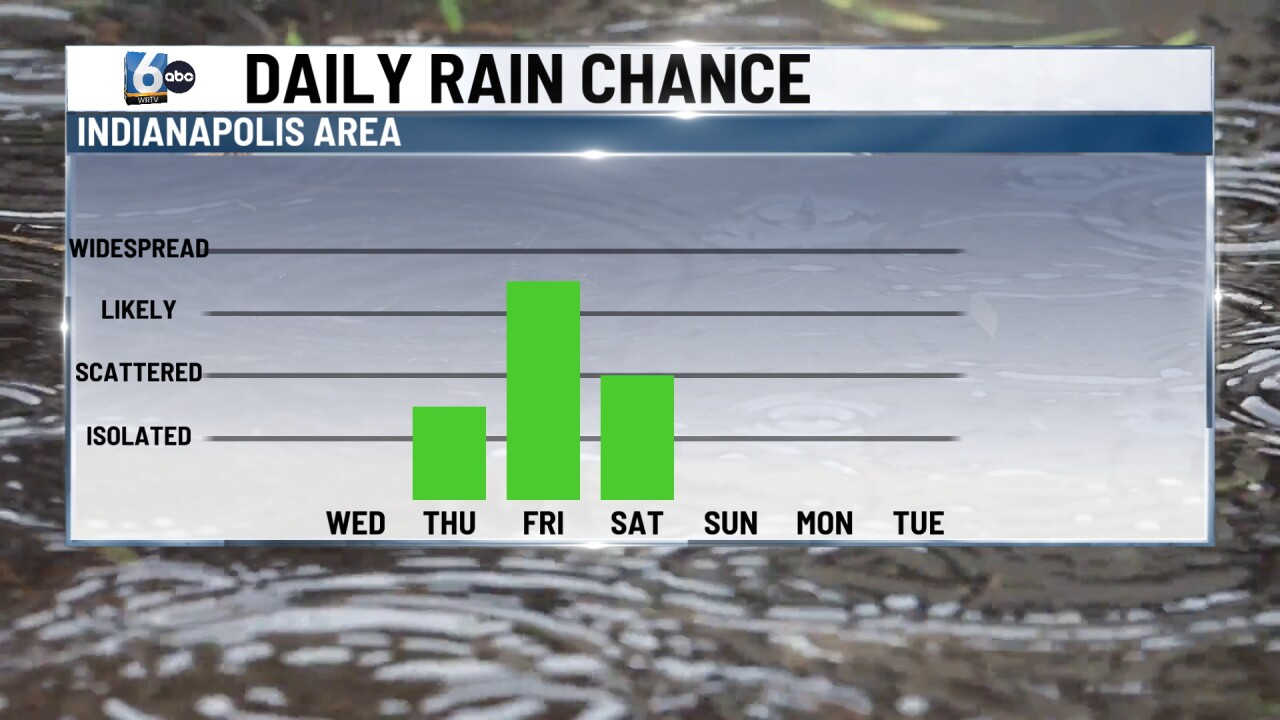
Chances for showers and storms return on Thursday evening
A break from rain continues into Wednesday and most of Thursday. Isolated chances of rain are possible later on in the day.
Frankton police officer loses home in fire four years after losing daughter
A large fire destroyed a Frankton Police Officer’s home in Bunker Hill on July 6. The cause of the fire is under investigation by the state fire marshal, but no foul play is suspected.
ISP: Woman charged with multiple offenses after driving drunk with child in car
A northern Indiana woman faces several drug charges after operating while intoxicated with a child in the car, police said Tuesday.


