


INDIANAPOLIS — It's Severe Weather Preparedness Week in Indiana, which means this is a good time to revisit your plans for when a storm hits.
Here's what you should know about thunderstorms, a common type of severe weather event.
Every thunderstorm produces lightning. So, all thunderstorms are dangerous.
The average, garden-variety, thunderstorm typically lasts about 30 to 45 minutes. They produce gusty winds, heavy rain and sometimes small hail.
Of all the thunderstorms that develop this spring and summer, only about 10% will become severe. Severe thunderstorms produce wind gusts of 58 mph and/or 1-inch diameter hail, which is the size of a quarter. Destructive thunderstorms can produce wind gusts of 80 mph and baseball size hail.
Supercell thunderstorms get special attention during severe weather coverage. They are the most likely to produce all forms of severe weather. The supercell is the monster truck of severe storms.
What makes this storm unique is the warm, moist, rotating updraft feeding the storm, which is separate from the heavy rain and cold downdraft of the storm. The storm is “balanced” and can go on for hours.
You can get alerts for approaching severe weather with WRTV's Storm Shield app. It’s free and serves as a weather radio for your phone.
-

Suspect arrested in connection with April shooting on Indy's near east side
Indianapolis police arrested a suspect over two months after a warrant was issued in a near east side shooting that left a victim critically injured.
Is your car ready for the heat? Indiana mechanics say check these things now
Extreme heat is putting stress on vehicles across Indiana, and local auto shops are bracing for more breakdowns as temperatures climb.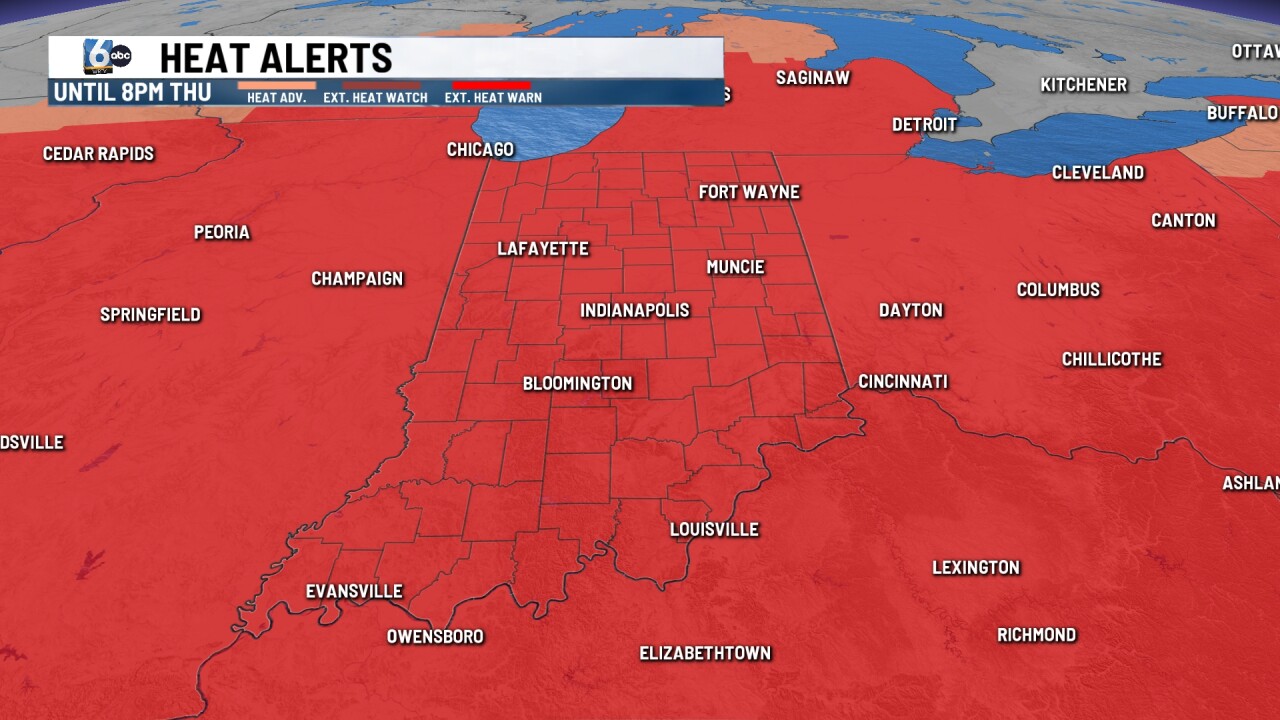
Heatwave holds on with another day in the 90s
Another day with high heat and humidity across parts of Indiana. Our pattern begins to shift a little and brings us more rain chances for the end of the week into the holiday weekend.
Indianapolis EMS director sees surge in calls during heat wave
Due to the extreme heat, Indianapolis Emergency Medical Services has seen a spike in heat-related calls. People are encouraged to check on their neighbors and loved ones.


